Shalva Papuashvili to Georgian diplomats: Do not hesitate to defend Georgia’s sovereignty - in dealings with an adversary or a friend; sometimes, a friend needs to be reminded even more that partnership does not mean replacing another’s political will with one’s own
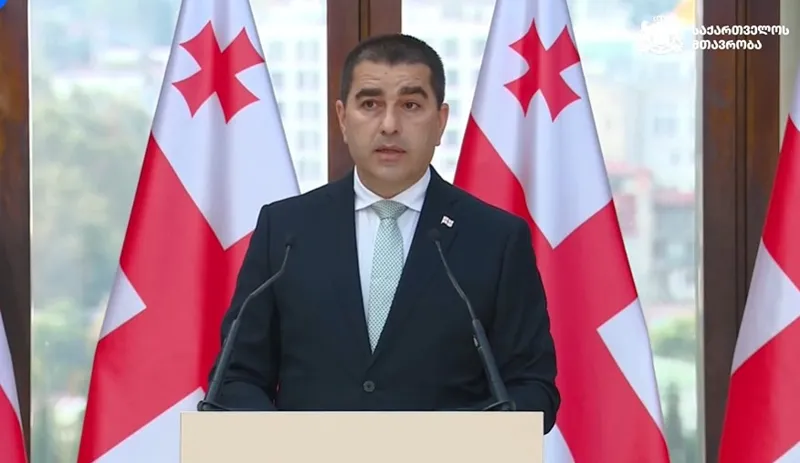
"I would like to say this specifically to Georgian diplomats: do not hesitate to defend Georgia’s sovereignty, in dealings with an adversary or a friend. Sometimes, it is precisely a friend who needs to be reminded that partnership does not entail substituting another’s political will with one’s own. Friendship does not negate sovereignty, and even the best of intentions cannot justify interference in the internal affairs of another state," Shalva Papuashvili, Speaker of the Parliament of Georgia, stated while speaking at an event dedicated to Diplomat’s Day.
According to Papuashvili, Georgia now possesses greater experience and understands that international politics has never been a realm for sentimentality, and that states act in accordance with their own interests.
"Today, I would particularly like to acknowledge our foreign diplomats who represent their respective countries in Georgia. Diplomatic relations are successful when, despite differing interests, we are able to listen to one another, show mutual respect, and maintain a partnership. It is upon such relationships that trust is built—relationships that, above all, require truth, responsibility, and moderation. Exactly one year ago, on this very day, I stated that the rules-based international order was under unprecedented pressure. The past year has shown us that this was not merely a theoretical warning. Today, international relations are increasingly reverting to the crude logic of force, self-interest, and influence. The outbreak of new wars has become almost an everyday occurrence. The sovereignty of nations is facing an unprecedented test. Furthermore, the principles of international law are being disregarded precisely when their observance is most needed. Thirty-five years ago, when Georgia restored its independence, we viewed the world to which we were returning with far greater optimism. We believed that the end of the Cold War would be followed by an era where relations between states were increasingly defined by law rather than by force. Today, we possess greater experience. We now understand that international politics has never been a realm for sentiment; states act in accordance with their own interests. Recognizing this is not cynicism—it is an essential prerequisite for a responsible foreign policy. Therefore, I wish to say this specifically to Georgian diplomats: do not hesitate to defend Georgia’s sovereignty, whether in dealings with an adversary or a friend. Sometimes, it is precisely a friend who most needs to be reminded that partnership does not entail replacing another’s political will with one’s own. Friendship does not negate sovereignty, and even the best of intentions cannot justify interference in the internal affairs of another state," stated Papuashvili.
According to him, Georgia itself must set an example by respecting the principle of non-interference.
“Georgia should not merely demand that others respect the principle of non-interference; we ourselves must set an example of respect for international law. A Georgian diplomat serving abroad should act as a representative, partner, and friend of Georgia—but not as an interloper in the host country. We must respect the choices made by other peoples, just as we demand respect for the choices made by our own people. If we wish to restore the international order, we must return to these fundamental principles: sovereignty, equality, non-interference, and mutual respect. This is especially critical for small and medium-sized states. A major power might occasionally believe it can easily afford the cost of breaking the rules; for a small state, however, international law and respect for sovereignty serve as a primary guarantee of security. Therefore, the task of Georgian diplomacy today extends beyond simply explaining our positions. Your duty is to safeguard Georgia’s national interests in a world where such interests increasingly collide in a direct and overt manner. This requires both adherence to principles and the capacity for flexibility—the ability to cultivate partnerships, while also discerning where the line lies between a reasonable compromise and the surrender of one’s own interests,” Papuashvili stated.