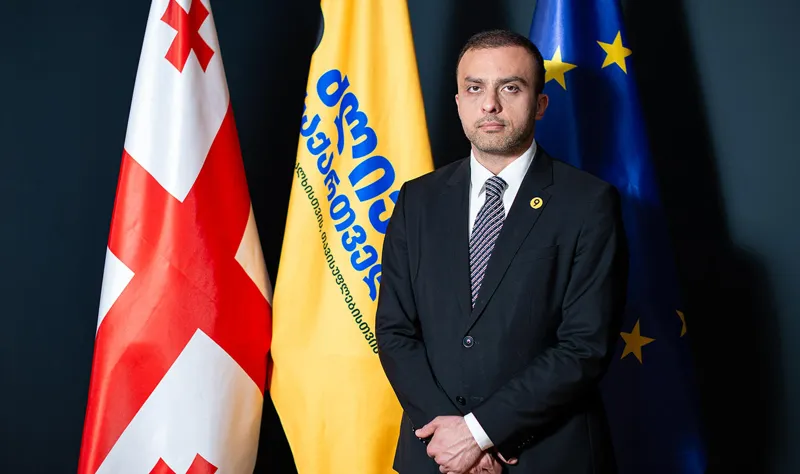
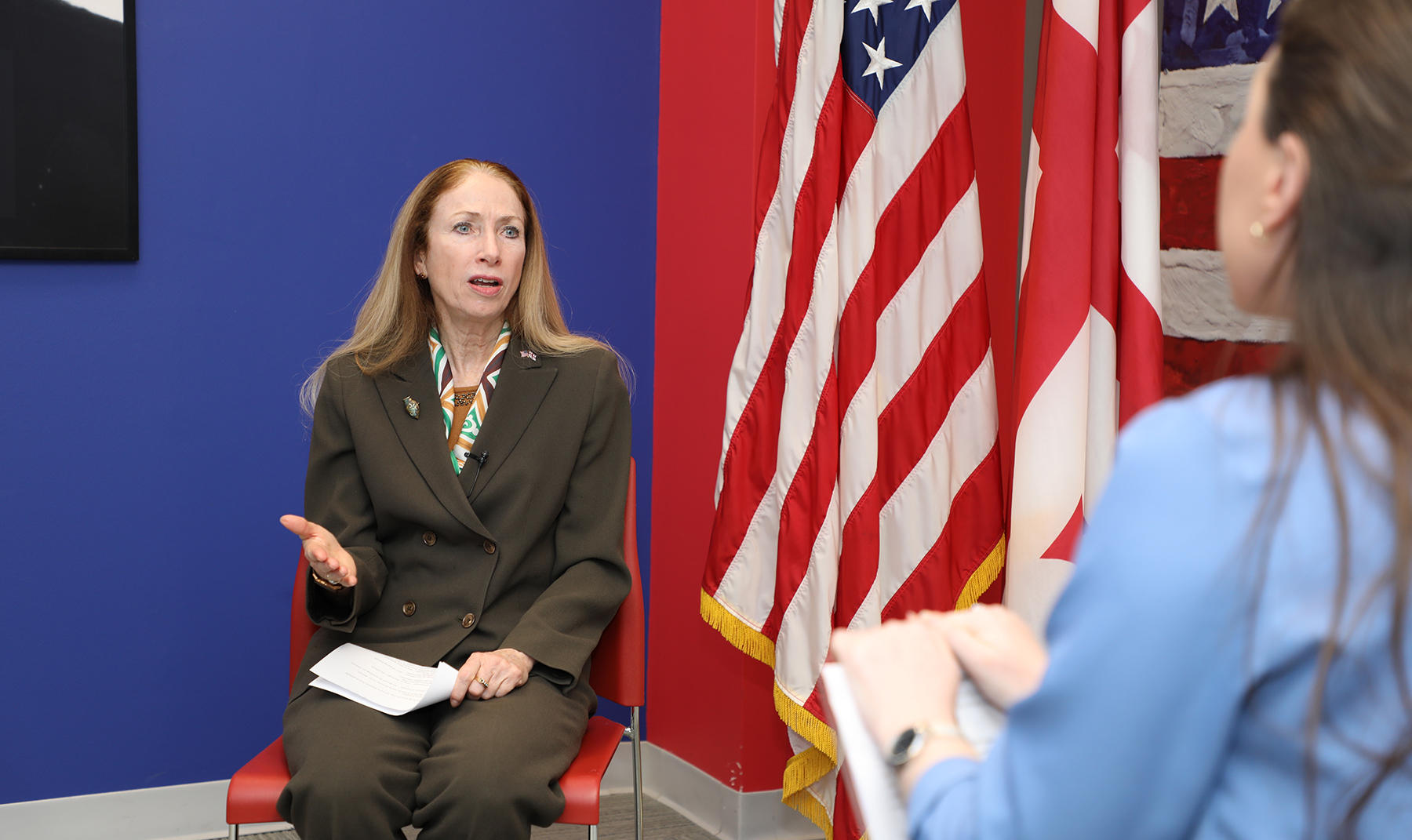
Kelly Degnan: Peaceful protest is an important way to express concerns, but there are also other ways to do that, including by working through Parliament - it has long been the US position that Georgia's political leaders should use the Parliament
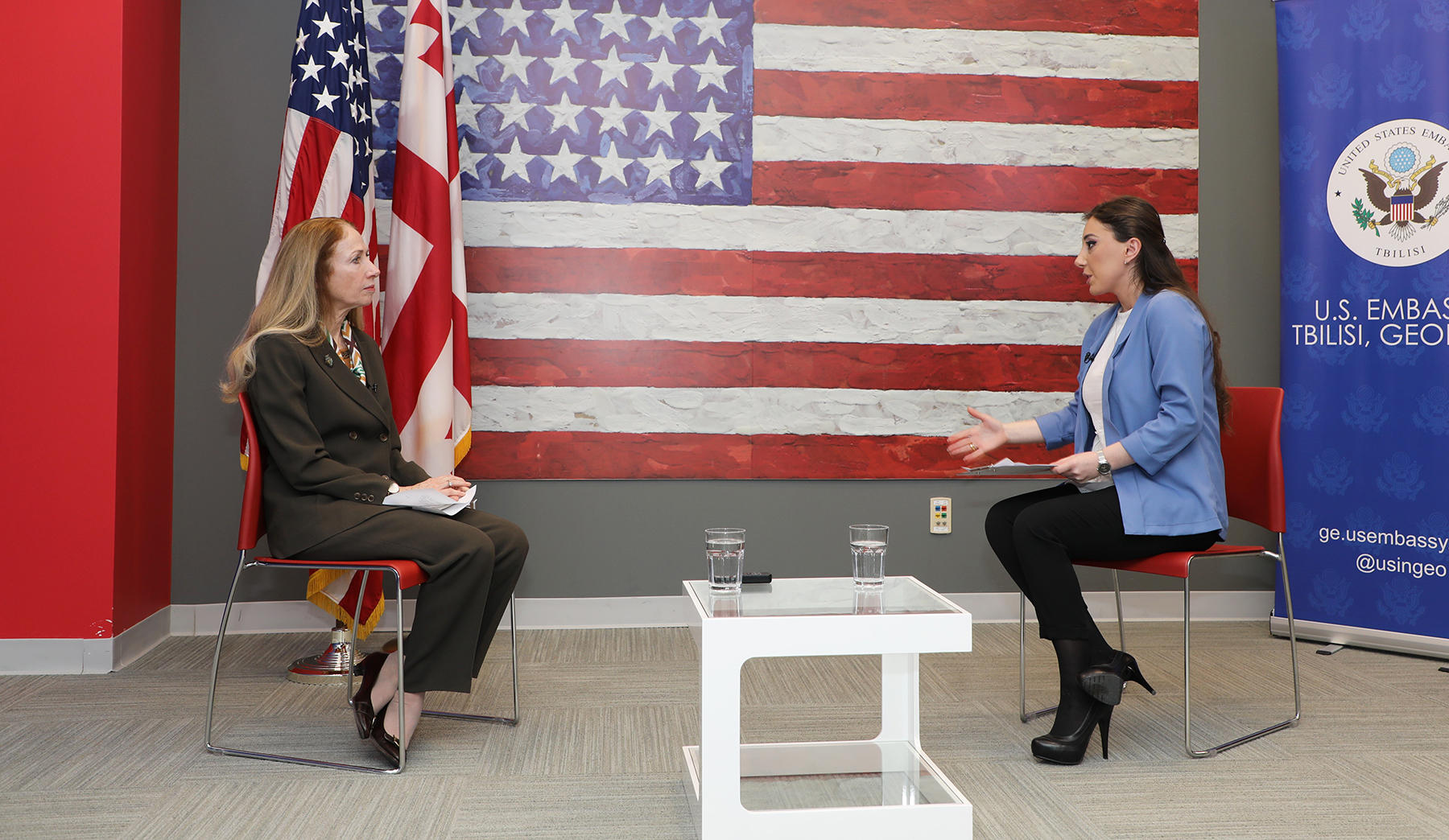
The ambassador of the United States of America believes that there are groups operating in Georgia that are trying to undermine the long-standing partnership between Tbilisi and Washington.
As the ambassador stated in an exclusive interview with InterPressNews, such groups share the classic strategy of the KGB/FSB and follow the Kremlin's disinformation guidelines by repeating disinformation.
What does the ambassador think about the praise that official Tbilisi received from Putin's Russia, how does she evaluate the steps taken to fulfill the 12 recommendations and how does she view the processes developed around Mikheil Saakashvili - ambassador Degnan discusses these and other issues in an interview with IPN.
First of all, I would like to thank you for being involved as much as possible in all the issues that are politically and socially important for Georgia and helping the country to achieve its strategic aspirations on the way to the European Union and NATO.
I can't help but start our interview with a discussion about the decision made two days ago by the Tbilisi City Court on the motion to postpone the sentence or release Mikheil Saakashvili. Judge Giorgi Arevadze's decision once again changed the political life of the country, and not towards stability, but the opposite. I would like to ask you, taking into account the political context and Saakashvili's health condition, how correct was the decision made regarding the former president of Georgia?
Obviously, this is a very serious situation. We are all watching Mr. Saakashvili’s health and wellbeing very closely. I have not seen the judge's decision yet, so I'm not sure of the basis for it, but I have been told that people were surprised that it came so quickly. I think people were expecting more deliberation before a ruling was issued. So, I think it's best to wait and read the judge's decision before making any comments on it.
"Georgian authorities should stop the political settlement with the Ukrainian citizen, ensure the protection of his rights and hand him over to Ukraine" - the said statement was made by the Ministry of Foreign Affairs of Ukraine. We heard similar calls directly from the President of Ukraine. Poland is ready to provide Saakashvili's transportation and treatment. MEPs even held a debate regarding Saakashvili's health condition. What do you think should be the position of the Georgian government in light of these calls?
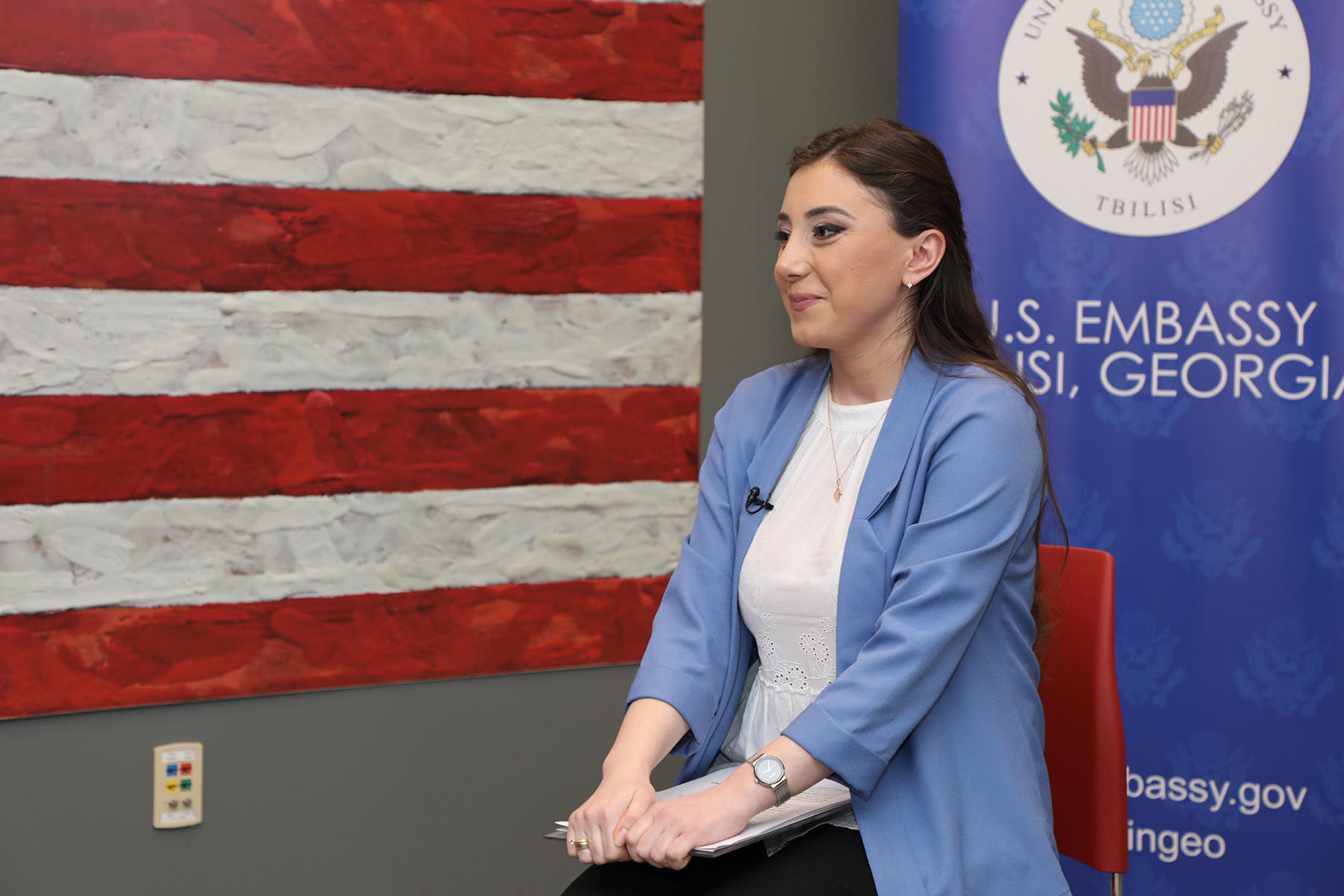
It's natural that the Ukrainian government is going to speak out on behalf of their citizen. I don't think that it's a surprise that we've heard these forceful statements. I think we all know that there are many Members of Parliament around the world who are following this case very closely and are concerned for Mr. Saakashvili’s health and wellbeing. My government is also concerned, especially when we see statements and assessments by the Public Defender's Office and others who have indicated there's been a deterioration in his condition. As we've said many times, and I know the government knows this: it is the government's responsibility to ensure that Mr. Saakashvili receives the care that he needs, and we continue to urge them to take the necessary steps to see that his human rights are respected and that his health and welfare is taken care of.
Saakashvili has already assessed the court's decision as a death sentence for him. I don't want to develop dramatic scenarios, but I have to ask you - if everything related to Saakashvili ends fatally, what will be the reaction of the United States of America?
Again, we are watching this very closely. Of course, I'm sure this decision was a tremendous disappointment for Mr. Saakashvili and his family who are very concerned about this. We will continue to press the government here to take the necessary steps to avoid anything becoming more serious than it is, and to ensure that Mr. Saakashvili gets the care that he needs.
After the announcement of the court's decision, Mikheil Saakashvili issued a statement calling on the population to get angry. Very soon, permanent rallies were announced by National Movement not only in Tbilisi, but throughout the regions, several of them have already been held. Added to this is the fact that part of the opposition is still boycotting parliamentary life. How correct do you think this step of the opposition is? Don't you think that society is tired of moving in the same circle that involves rallies and boycotts?
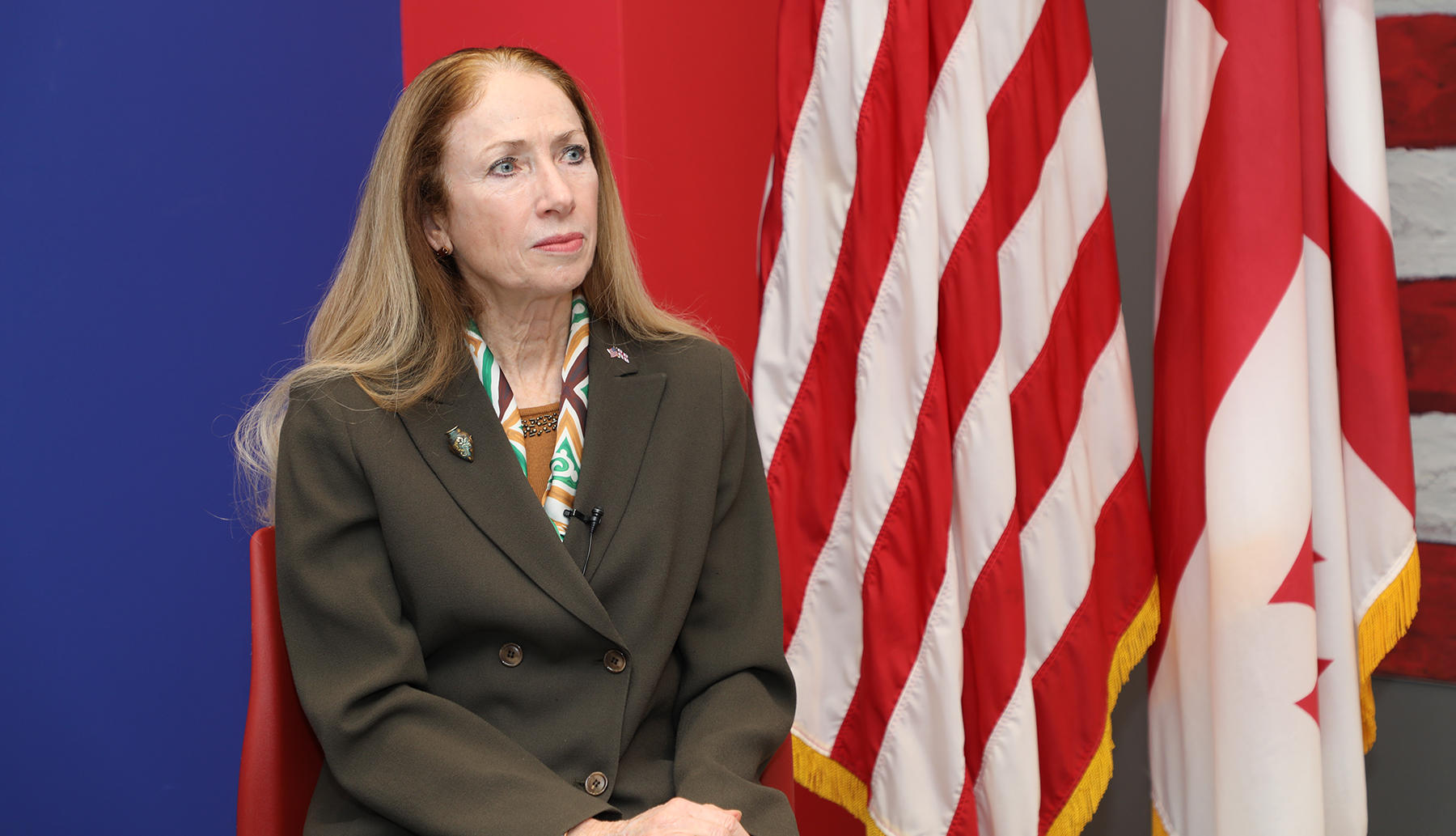
It is important that people in Georgia have the freedom and the right to peacefully protest and peacefully express their views. It's important that it be peaceful, but this is a country where that's still possible, and I think that is an important way to express concerns. There are other ways to do that, including by working through Parliament, working through local government. It has long been the United States’ position that Georgia's political leaders should use the Parliament that they have built over the last 30 years to work through their differences and to improve the living environment for the people of Georgia.
That is what the citizens of Georgia are looking for. They're looking for results that come from their political leaders working together to solve Georgia's challenges and to take Georgia forward. We haven't seen Georgia's political leaders working together very often. I would say that's because the conditions inside Parliament have been difficult, that often leads to people feeling that the only place to express their views is through peaceful protest.
Parallel to all this, Georgia has been given a task by the European Union and this task consists of 12 points. As you know, the European Union published an assessment of the alignment of Georgian legislation with the EU acquis, and members of the ruling party perceived the assessment as quite optimistic. I would like to ask you, as one of the supporters of this process, what did the evaluation of the European Commission show you? Does this give grounds for the kind of optimism that government officials saw - that the country deserves candidate status?
The task regarding the 12 points for Georgia's European candidate status came to the government from the people of Georgia, who have made it very clear that their choice is a European future. Every single leader in Georgia should be working intensively on the reforms that are required to get candidate status later this year. Everyone should be working toward this because of the tremendous benefits that are going to come to families, to young people, to entrepreneurs, and across the board. Moving closer to the European Union brings greater prosperity, brings greater security. That is why the people of Georgia for decades, if not centuries, have been working toward a European future, toward integration into this European family that Georgia has always been a part of.
So, I think some progress has been made, obviously. We've heard from the European Union representatives themselves that there is more work to do, that this isn't just a process of box ticking. This is a process of showing to the European member states, and to the people of Georgia, that this government and Georgia's leaders are committed to Georgia's democratic reforms, and to Georgia's strong democracy and democratic institutions. That's what the member states are looking for: Is Georgia like us? Does Georgia have the same dedication to freedom, to values and principles, and respect for human rights? That is what holds the European Union family together. So, anyone who is going to be joining that family needs to share those same commitments, values, and principles.
You mentioned that more work is needed. If you can specify, what are the directions, the fulfillment of which, in the end, ensures that Georgia gets the candidate status?
That's a question that's better left to the European Union since they will be the ones who are doing the evaluation. What I can say clearly is that Georgia needs more unity, more inclusive processes that bring together the stakeholders, that show that this is a unified Georgia working toward candidate status, not a divided Georgia. That would be a tremendous message, not just for the European Union, but for the people of Georgia to see.
To what extent is the criticism of the Georgian government towards its strategic partners consistent with Georgia's strategic aspirations. You yourself have been the object of criticism and attack, so I would like you to evaluate the trend, which has been ongoing for the second year already.
It's natural to have disagreements when we've been partners for as long as we have. In fact, I think both our countries have a saying: Truth is born from debate. Truth is born from dissension. It's important that we are able to discuss our differences, but we need to have that discussion respectfully. We need to be able to hear each other's differences. There has to be respect for the truth. There has to be respect for the facts. We know that there are some groups that are trying to undermine our partnership and to create confusion and division by deliberately repeating what they know to be false disinformation. That's a classic KGB/FSB strategy. Georgians have probably seen that many times before.
The main point is that all we have done here in Georgia is build together. Georgia and the United States have spent the last 30 years building a stronger economy, a stronger security force, stronger Coast Guard and Border Police, stronger democratic institutions that are the foundation for the kind of society, the kind of country that Georgian citizens want live in. This is what we focus on, and we leave those who are trying to create confusion and division, those who follow the Kremlin playbook, to their disinformation.
In general, I would like to ask you about the relationship between Georgia and the United States. What would be your assessment, and could you specify the financial assistance that the US has directed to different sectors of Georgia during this 30-year partnership?
It's been a tremendous honor for me to represent the American people here in Georgia, a country that has been such a close and important partner to the United States for 30 years. I've had a chance to build on what Americans and Georgians have built over the last 30 years, and it spans almost every sector. When I got here, COVID was just hitting all of us. Despite the difficult situation, it was wonderful to be able to work so closely with the Georgian government, redirecting our assistance to be able to get information about the virus out to Georgian communities, including ethnic minority communities to be sure that they too had information in Georgian and their native languages. We were very pleased to be able to donate 500,000 Pfizer vaccinations at a critical time to help protect the Georgian people against the pandemic.
That's one very recent example of what we've done, but you can look at almost any sector and see that the United States either has or is working together with our Georgian partners and the Georgian government to build a better quality of life for people. Whether it's the schools that Millennium Challenge Corporation renovated, or the institutions in which USAID is training teachers; whether it's improving the capability of the Georgian Defense Forces so they can better defend Georgia's borders, or the Border Police, the Coast Guard, the entrepreneurs here in Georgia who are amazing—to be able to help them expand their businesses or get their business started.
I've met some wonderful women entrepreneurs just recently in Oni and in Khulo, who are starting their own businesses, employing people in their family, but also employing people in their communities. These are contributions that are helping at a very grassroots level, but it all goes toward making Georgia's economy stronger. When we look around and we see what Georgia has done with the support that we provide, we are so proud to be partners with Georgia.
I would like to draw your attention to one more issue - Russian Foreign Minister Sergey Lavrov has already repeatedly approved the position of the Georgian authorities regarding the fact that Tbilisi does not join the sanctions against Russia. The first diplomat of Russia went even further and noted that Georgia bravely copes with the coming pressure from the West. What do you think Sergey Lavrov's intention is when he makes these types of statements?
Foreign Minister Lavrov does not have very much credibility. That was undermined years ago. This is a good example, however, of what Russia wants. Russia wants partners who are weak and dependent, and if you look around at who Russia's partners are, they're weak and dependent on Russia. What the United States has been building with Georgia over the past 30 years is a strong, independent state that is capable of defending its freedoms that are important to it and its economy.
Georgia has taken a position regarding Russia's war against Ukraine that it is comfortable with. We have been very understanding and sensitive from the beginning that Georgia is in a sensitive situation with 20% of your territory occupied. Our discussions with Georgia have always been about what Georgia feels comfortable doing in terms of providing support to Ukraine. The humanitarian assistance that the Georgian people and government have so generously provided has been very important recently: the industrial generators that the government sent over were hugely important for Ukraine right now. Georgia has also complied with international financial sanctions since the very beginning. You have a very good National Bank and a very professional Ministry of Finance. They are ensuring that Georgia is in compliance with international financial sanctions. We don't have any evidence that they are not complying with sanctions. Granted, there is a huge amount of goods that are flowing across all of our borders. I don't think anybody can say with a hundred percent surety, but I think what we have seen over the decades in our work with the Customs Service and the Border Police is that they are trained, they are equipped, they know what they're doing, and they are doing the best job they can under the circumstances.
During the last period, the conversations regarding the possible resumption of bilateral flights with Russia have become more active. We have already seen the statement of the State Department, where it is mentioned that in such a case, the companies will be sanctioned. In its statement, the State Department also noted that now is not the time to increase engagement with Russia. As the US representative in Georgia, do you see the efforts of the Georgian authorities to increase engagement with Russia?
That's a better question for the government, but this is a time when countries are moving away from Russia. It's a pariah state. No one is looking to get closer to Russia right now. Georgia has spent years trying to reduce its dependence on Russia, whether it's energy or trade, and it has made some good progress on that. Georgia does not need to look to Russia to sell its goods. There are many other markets that Georgia has developed. Georgia is also attracting tourists from all over the world. Georgia is not dependent on Russian tourists, so it's a misunderstanding to think that Georgia is so dependent on Russia. It's not. And as I said, that is part of what we've been working on together, along with other friends of Georgia, to help Georgia reduce its dependence on a country like Russia that only uses it to keep you weak, to keep you dependent, and to leverage that over you when they need to or want to. That's not a position that Georgia wants to be in, or any other country wants to be in.
"Now there is a government in Georgia, which, in response to the unprecedented pressure of the West, the calls for joining the sanctions and the request to "open a second front", says that it is guided by national interests," this statement was made by the Russian Foreign Minister a few days ago, which confirms that the speculations about opening the second front in Georgia did not lose their relevance even in 2023 and were reflected in the Russian propaganda rhetoric. With public statements, you have repeatedly tried to convince the Georgian authorities that the goal of Washington and Brussels is in no way to spread the wave of war on Georgia. I want to ask you whether you are trying to convince the government representatives of this even behind closed doors?
The Georgian government knows very well that we have never pressured Georgia to be involved in this war. The only discussions we've had have been about what Georgia is comfortable providing. We very much appreciate the humanitarian assistance that the government has provided, and we appreciate the enforcement of international financial sanctions. We have never pressured the Georgian government to impose bilateral sanctions or to do anything else.
What is at stake here is Ukraine's ability to defend its identity, its sovereignty, its territory. The United States has been coordinating support to help Ukraine defend its identity and its territory and its sovereignty. We've asked all of our partners and allies to contribute what they feel comfortable contributing. This other disinformation is driven by those who are trying to confuse Georgians and those who are trying to divide this country further; those who are trying to undermine the long-standing partnership between Georgia and the United States. The United States and the friends of Georgia have spent the last 30 years helping Georgia build a strong, independent country that can make its own decisions and that has its own identity and sovereignty. We want to help Georgia protect its identity, just as we are trying to help Ukraine.
I would like to touch upon one more issue that concerns the media. As you already know, the Speaker of the Parliament, Shalva Papuashvili, made a decision to establish regulations for accredited media representatives in the Parliament. It also provides for sanctions for those who violate specific rules of conduct. The third sector, as well as the opposition parties, have already called on Papuashvili to withdraw his order, because, according to them, the purpose of bringing journalists under regulations is to limit the activities of the media. To what extent do you consider the regulations introduced in relation to journalists as interfering in media activities?
I haven't seen what the speaker is proposing. I think it would be important to see not only what he's proposing, but also how it's implemented. As a journalist myself, I know there is an accreditation process for journalists, and that can sometimes be very useful if it is done in a way that isn't used to censor or to exclude outlets. Let's see what the Speaker has in mind. Let's see if this regulation is implemented in a way that allows for a robust media.
Salome Abulashvili
InterPressNews