Irakli Pavlenishvili on Maka Bochorishvili’s statement: They did everything to block the path to European integration - let them show even one step where they were constructive - we’re not asking for much
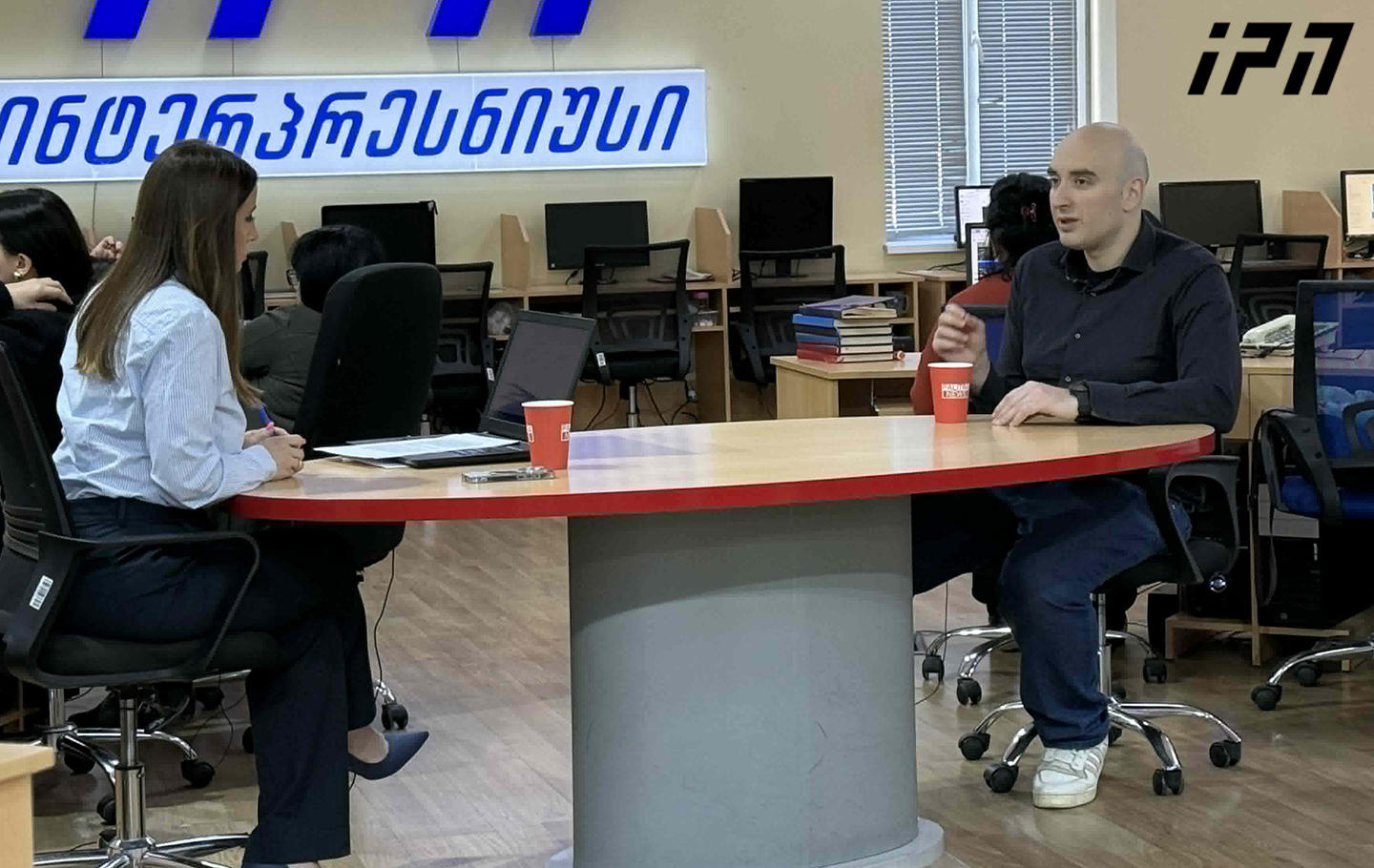
“They themselves know best that they did everything to block the path to European integration — let them show even one step where they were constructive; we’re not asking for much,” said one of the leaders of the United National Movement, Irakli Pavlenishvili, during an appearance on PalitraNews’ program Day Newsroom, commenting on the Foreign Minister Maka Bochorishvili’s interpellation hearing in Parliament on the issue of European integration.
As Pavlenishvili noted, “this regime and all its representatives are themselves inadequate.”
“The only thing they have left in terms of propaganda is to tell outright lies. Starting from 2024, they adopted a law knowing very well the international reaction and the reaction of Georgian society. They knew this law was absolutely unacceptable to the vast majority of the population, that it would cause polarization and escalation. They talked about protecting peace, yet they themselves artificially created a crisis. Then, in an orchestrated manner, they began beating people, physically assaulting journalists, activists, and politicians. They deliberately adopted laws incompatible with European standards.
They know better than anyone that they did everything to block the path to European integration. Show me even one recommendation fulfilled by Ivanishvili and his regime in the electoral or judicial spheres. Show me any opinion of the Venice Commission that has been implemented recently. Or any step that would even slightly inspire a sense of equality and justice among international partners. On one side, we have dozens of political prisoners, while on the other side, not a single person has been arrested, despite the fact that we watched live how people were nearly killed. Therefore, for these people to claim that anything is the opposition’s fault is completely inadequate. Let them show even one step where they were constructive — we’re not asking for much.
When it comes to foreign policy, how can a country that calls its partners a ‘war party’ and the ‘deep state,’ and blames the collective West as the main culprit in every conflict, including in our region, speak about advancing European integration?! These people simply lack the courage to say politically that they are not Europeans and are anti-European. In reality, networks like ‘Neutral Georgia’ associated with the ruling party express these messages more openly — that we don’t need the EU, that we are not Europe, and so on. This is what they truly think and do; they just cannot publicly declare it because they need this camouflage,” Pavlenishvili said.
In addition, Pavlenishvili also commented on a statement by the Chair of Parliament’s European Integration Committee, Levan Makhashvili, who said that if Georgia had done everything in terms of European integration, it would have ended up like Ukraine. According to Pavlenishvili, “this belongs to the genre of political satire.”
“There is no country in the world where you could hear such a statement — that the head of European integration in Parliament says that if we had been successful on the path of European integration, the country would have been destroyed. Is this a normal state? A normal so-called parliament? A normal country? The person responsible for European integration says that success on this path would have destroyed the country. Then why is this person even leading European integration if it is supposedly destructive? I believe it is beneficial for our country. Why would Europe want war in Georgia? They have never been able to explain this. The key thing is that we must all understand: if we have no partners or friends and are left relying only on Russia, Russia will swallow us. Russia has no goodwill toward us,” Pavlenishvili stated.
He also spoke about whether there are political similarities and differences between Georgia and Hungary, considering the results of Hungary’s recent parliamentary elections. According to Pavlenishvili, while there are many differences between the two cases, there are also some similarities.
“Orbán has always been a figure who emerged from within politics — he was a politician. In the late 1980s, he was a leader of the student movement; in the 1990s, a young politician fighting for reforms. Ivanishvili, on the other hand, in the 1980s and 1990s was an oligarch closely connected to Russian security structures. That is one difference between the two. Another important difference is that Magyar was able to freely conduct an election campaign, whereas the main opponent of Ivanishvili, in the view of the United National Movement — Mikheil Saakashvili — does not have that opportunity. Nor do Levan Khabeishvili or Irakli Nadiradze. There are many differences between these two examples. However, that does not mean we cannot learn something. There are similarities as well. I think it is hypocritical for anyone to claim that because something happened in Hungary, it will happen in Georgia. But we can learn everything. Magyar positioned himself very correctly — he was Hungarian, a nationalist or conservative Hungarian, and did not leave that space to Orbán, who was artificially adopting that image. But when elections are not being held in this country, we are forced to fight for elections,” Irakli Pavlenishvili said.