European Parliament – We reiterate our call for the EU’s and the Member States’ representatives of Georgian Dream – we maintain our previous positions regarding the non-recognition of the legitimacy of the parliament and the president appointed by it
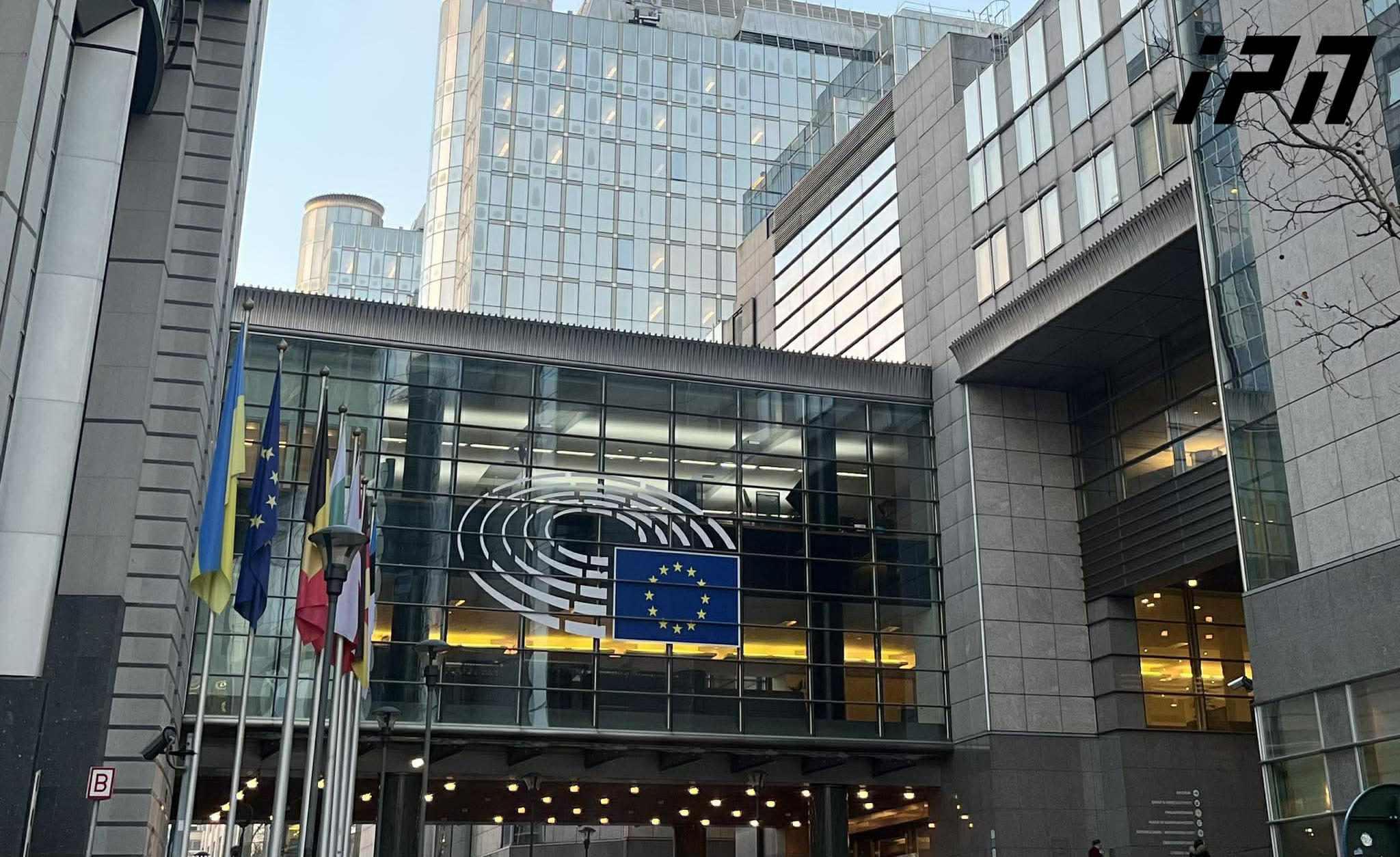
The European Parliament has adopted a report on Georgia. According to the document, the European Parliament regrets that Georgian Dream has not taken any steps to reverse its anti-democratic and anti-European course.
“The European Parliament considers that engagement with the Georgian authorities should be strictly conditional on them taking tangible and verifiable steps reversing their current course of democratic backsliding, repression, restrictions and fierce Russian-style anti-EU disinformation; maintains, therefore, its previous positions regarding the non-recognition of the legitimacy of the parliament and the president appointed by it; regrets the fact that the parliament of Georgia is a de facto one-party parliament that is rubber-stamping legislative initiatives aimed at dismantling the foundations of a pluralistic parliamentary democracy; notes with concern the fact that the de facto parliament of Georgia has declared its temporary withdrawal from the EuroNest Parliamentary Assembly;
Reiterates its call for the EU’s and the Member States’ representatives and members of parliament to refrain from holding meetings with representatives of the regime, starting with the current de facto president, as long as the Georgian authorities continue their democratic backsliding and repression; calls on the Member States to consolidate a united and coordinated approach regarding limiting political contacts with the Georgian Dream authorities to matters of strict necessity, while maintaining and strengthening engagement with Georgian civil society, independent media, and academic institutions; condemns the persistent aggressive rhetoric against the EU and Member States’ diplomats, politicians and officials; stresses the importance of continuing to promote European norms, democratic values and the European path among the Georgian population and political forces committed to democratic principles;
Notes with concern the aggressive rhetoric against the United States, the United Kingdom and other allies;
Calls on the Georgian authorities to restore merit-based civil service safeguards, reinstate effective legal protection against politically motivated dismissals and ensure effective implementation of the right to access public information;
Points out that the municipal elections of 4 October 2025 were boycotted by the majority of the opposition parties, reflecting the deep mistrust that the majority of society has in the independence of the electoral process; regrets that the amendments to Georgia’s Electoral Code made in December 2024 and March and April 2025 further strengthened the dominance of the ruling party and introduced new restrictions on registration for local observers, media and electoral subjects; reiterates that the Georgian authorities ignored calls by the Venice Commission to repeal the changes made in 2024; stresses that the lack of observation missions from the OSCE/ODIHR owing to a late invitation and from local observer organisations owing to restrictions seriously affected the transparency of the electoral process and the credibility of its results; reiterates its call for an improved electoral environment established by an independent and impartial election administration, for future elections under diligent observation by international and national non-governmental organisations (NGOs); expresses its deep concern about the amendment of the Electoral Code of December 2025 that prohibits Georgian citizens from voting from abroad; stresses that participation in elections is a fundamental constitutional right of every citizen and has to be made possible regardless of one’s place of residence;
Condemns the adoption of unprecedented and increasingly restrictive legislation aimed at making it practically impossible for international support, including financial means, to reach civil society and media, and at cutting them off from any independent funding; highlights the most recent amendments to the Law on Grants, which came into force on 5 March 2026, which significantly broaden the scope of what is considered a ‘grant’ and make receiving grants or funding from abroad without prior government authorisation a criminal offence punishable by up to six years’ imprisonment; notes that this is a direct violation of the EU-Georgia Association Agreement; calls for the protection of political foundations, international NGOs, and development agencies; reminds the Georgian authorities that any harassment of EU Member State organisations will lead to direct consequences;
Notes that these amendments follow those made to the Law on Grants adopted in April 2025, which already significantly narrowed options for international financial support and introduced the requirement for international donors to seek pre-approval for grants from state authorities and restrictive monitoring and punitive administrative liability for recipients, aimed at deterring organisations from accepting international assistance, including funding from the EU; stresses that the broad definition of a ‘grant’ can cover wide-ranging transactions subject to prior approval and can make any citizen a potential target of persecution by the government; notes with concern the prohibition of party membership for eight years for any person ever employed by an organisation that has relied on foreign funding, thus banning a large number of socially active individuals from participating in party politics; strongly urges the EU and its Member States to take immediate action to safeguard and sustain the remaining independent media and civil society organisations in Georgia;
Deplores the continued attempts by the ruling Georgian Dream party to persecute political opponents, including through illegal arrest and detention, threats and physical attacks; condemns the imprisonment of political opponents for refusing to appear before the Temporary Investigative Commission of the de facto parliament of Georgia, which was used by Georgian Dream as a form of political show trial aimed at opening the way for the further persecution of political opponents and the banning of opposition parties; stresses that the existence of political prisoners is incompatible with Georgia’s obligations under the EU-Georgia Association Agreement; calls for the immediate and unconditional release of all those imprisoned on political grounds, including opposition politicians and former officials; notes that two opposition politicians were pardoned by the de facto president ahead of the municipal elections to ensure a semblance of competitive elections; strongly reiterates its demand for the immediate release of former President Mikheil Saakashvili on humanitarian grounds for the purpose of him seeking the necessary medical treatment abroad; calls, furthermore, on the Georgian Dream authorities to ensure that Members of the European Parliament are granted unhindered access to Mikheil Saakashvili and other political prisoners;
Notes that, despite a guilty plea and the existence of credible public evidence of corruption, the imprisonment of former Prime Minister Irakli Gharibashvili raises serious concerns as to whether the proceedings met fair trial standards; stresses that the case reflects broader concerns about politically influenced justice, informal power structures and internal divisions within the ruling Georgian Dream party, including the role of Bidzina Ivanishvili;
Calls on the Georgian authorities to implement independent accountability mechanisms, ensure judicial impartiality, and hold perpetrators of politically motivated abuses responsible in accordance with international human rights standards;
Calls for a comprehensive reform of the High Council of Justice in line with the Venice Commission recommendations, including the introduction of fixed non-renewable terms, transparent appointment procedures and extraordinary integrity checks for senior judicial office-holders with the meaningful involvement of international experts, in order to strengthen judicial independence and public trust in the judiciary; notes with disappointment the dissolution of the Anti-Corruption Bureau that was established in 2022, which was one of the key requirements for the EU to grant Georgia candidate status; calls on the Georgian authorities to amend the appointment procedure for the post of Prosecutor General by requiring a qualified parliamentary majority, and to align the Law on the Prosecutor’s Office with European standards;
Urges the Public Defender of Georgia to intensify the execution of his mandate and use all available mechanisms to safeguard human rights, while engaging in constructive dialogue and collaboration with human rights defenders and civil society in Georgia; emphasises the necessity to prevent any selective application of his mandate, as referenced in the 2025 Commission Report on Georgia; highlights the Public Defender’s distinct authority to request legislative opinions from the OSCE/ODIHR regarding authoritarian or non-democratic legislation;
Regrets the lack of progress made on de-oligarchisation and calls on the Georgian authorities to adopt a systemic approach in line with relevant Venice Commission recommendations, including through strengthened transparency requirements, effective conflict of interest rules and safeguards against undue influence over political and economic decision-making;
Strongly condemns the attempts by the Georgian authorities to ban opposition parties; calls on the authorities to immediately halt these attempts and to withdraw the constitutional lawsuit filed by 88 members of the de facto parliament of Georgia requesting that the activities of three major opposition parties – United National Movement, Coalition for Change and the Strong Georgia-Lelo coalition – be declared unconstitutional and that their registration be revoked; underlines the fact that such actions pose a dangerous threat to fundamental democratic principles and political pluralism; emphasises that a healthy democracy requires fair and free competition between various political parties;
Expresses strong disapproval of the recent introduction of a new article in the Criminal Code that prohibits ‘public and systematic’ criticism of the authorities or questioning of their legitimacy, as well as ‘any other public and systematic action by the same person’, which remains open to interpretation yet provides for imprisonment of up to three years; highlights that this allows for the de facto criminalisation of freedom of expression and calls on the government to denounce this law”, reads the report.