Valeri Chechelashvili: The tone of the European Parliament’s report has become tougher because the Georgian authorities’ attitude has become more rigid - sanctions against Georgian Dream members are now much more realistic
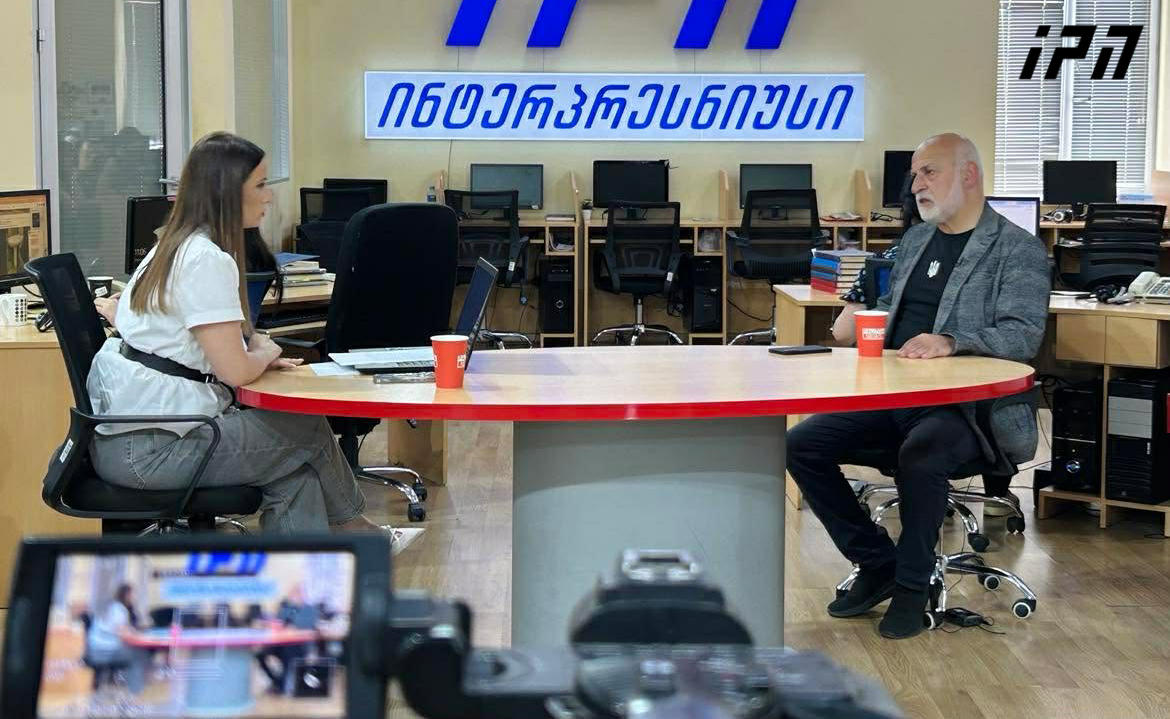
“The tougher tone of the European Parliament’s resolution is not a surprise at all. I believe that the threat of sanctions against members of Georgian Dream is now far more realistic,” said diplomat and member of the initiative First Georgia, Valeri Chechelashvili, on PalitraNews’ program "Day's Newsroom", commenting on the European Parliament’s resolution on Georgia.
According to him, the harsher tone of the report is entirely unsurprising because, throughout this period, the attitude of various branches of the Georgian government toward European institutions has become increasingly rigid and confrontational.
Regarding sanctions, Chechelashvili noted that the fact that 436 Members of the European Parliament supported the resolution demonstrates the existence of a very solid majority backing these approaches.
“Several conclusions can be drawn. First, this is indeed a very extensive report, and it shows that the European Parliament is very well informed about the details of what is happening in Georgia today. Second, the fact that the tone of the report has become harsher is not surprising, because throughout this period the attitude of various branches of the Georgian government toward European institutions has become stricter and more confrontational.
It is enough to recall Shalva Papuashvili’s statements that ‘the European Union is the Soviet Union,’ that ‘instructions used to come to us in Russian and now they come in English,’ and even his recent claim that the European Union is violating the principles and norms of international law with regard to Georgia. Thankfully, he cannot claim that the EU has occupied Abkhazia and the Tskhinvali region. Against this backdrop, the tougher tone was entirely understandable.
I think a very important message was sent to Georgian Dream when the European Parliament included a provision calling for the synchronization of sanctions policy. The resolution specifically states that the EU’s approach should be synchronized with that of the United Kingdom and the United States. It is clear that decision-making in the European Union is more difficult because there are 27 member states, but the direction and spirit of the policy are well established.
It is also important that 436 MEPs supported the resolution. This demonstrates that a very strong majority has formed in support of these positions. It is also noteworthy that the European Parliament continues to emphasize that the government is one thing and the Georgian people are another.
Yes, the sanctions section specifically mentions Bidzina Ivanishvili. It also refers to a range of institutions, including judges, prosecutors, and others. This is a very direct call for action addressed to the European Commission. While Viktor Orbán was Prime Minister of Hungary, he consistently defended the interests of Georgian Dream representatives and blocked such decisions. Some may argue that Slovakia or the Czech Republic could play a similar role, but I do not think they would display the same level of determination. They have a much greater need to remain part of European solidarity. Therefore, I believe the prospect of sanctions against Georgian Dream members is now considerably more realistic,” Chechelashvili said.
Commenting on the statement by the Chair of Parliament’s Foreign Relations Committee, Nikoloz Samkharadze, regarding the possibility of renewing dialogue with the European Commission, Chechelashvili said he does not have much hope.
The diplomat stated that “the principal voices conducting these negotiations, such as Shalva Papuashvili, provide no grounds for optimism.”
“At the same time, I do not think Brussels will refuse dialogue. As for the proposal itself, I would like to view it as a step toward realism and as a spark of opportunity. I would like to believe that Georgian Dream has recognized the risks facing not only the party but Georgia as well. However, to be honest, I do not have much hope.
Even the Deputy Foreign Minister stated in Parliament yesterday that Georgia is ready for dialogue but believes that all laws adopted are fully compatible with human rights. That is a very weak position. These laws have nothing to do with human rights. I do not know whether this was Mr. Samkharadze’s personal initiative or the result of consultations within Georgian Dream, but I cannot view it with much optimism.
I believe our relations with the European Union have reached such a deep deadlock that meaningful improvement may only become possible if relations with the United States begin to improve first. Until then, I do not expect significant progress,” he said.
Regarding relations with the United States, Chechelashvili argued that Prime Minister Irakli Kobakhidze made a serious mistake through his recent statements.
“There was hope that Georgian Dream would make progress in relations with the Americans. I am not concerned about Georgian Dream itself, but it is critically important for Georgia to restore normal relations with its main strategic partner.
There appeared to be movement in that direction, but Irakli Kobakhidze made a very serious mistake in dealing with the United States. I do not know whether it was deliberate or emotional. I am referring to the statement in which he essentially accused the United States of dishonesty. He described cooperation with America as a worthless piece of paper that had brought Georgia nothing. That is a major falsehood and an act of ingratitude. More than that, it is a serious diplomatic mistake that certainly cannot have a positive effect on American attitudes,” he noted.
Chechelashvili also commented on the summoning of the British Ambassador to the Georgian Ministry of Foreign Affairs, saying that the ministry’s objections were largely justified in that particular case, although the diplomatic gesture itself does not help improve relations with the United Kingdom.
“As I understand it, the objections were quite justified because the vessel in question was not under sanctions at the time it entered Kulevi. The relevant arguments were presented clearly. As for the form of the response, summoning the British Ambassador certainly does not help improve relations with the United Kingdom, one of the world’s leading geopolitical powers. That is very regrettable. In diplomacy, the manner in which something is done often matters a great deal,” Chechelashvili said.