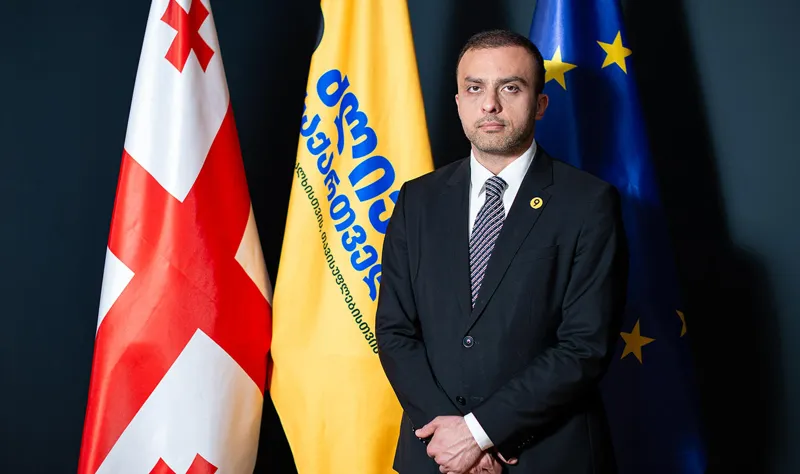
Salome Zurabishvili: We’ve come a long way this far – the statements and mistakes of the past year cannot be decisive, we can’t be put aside from this path
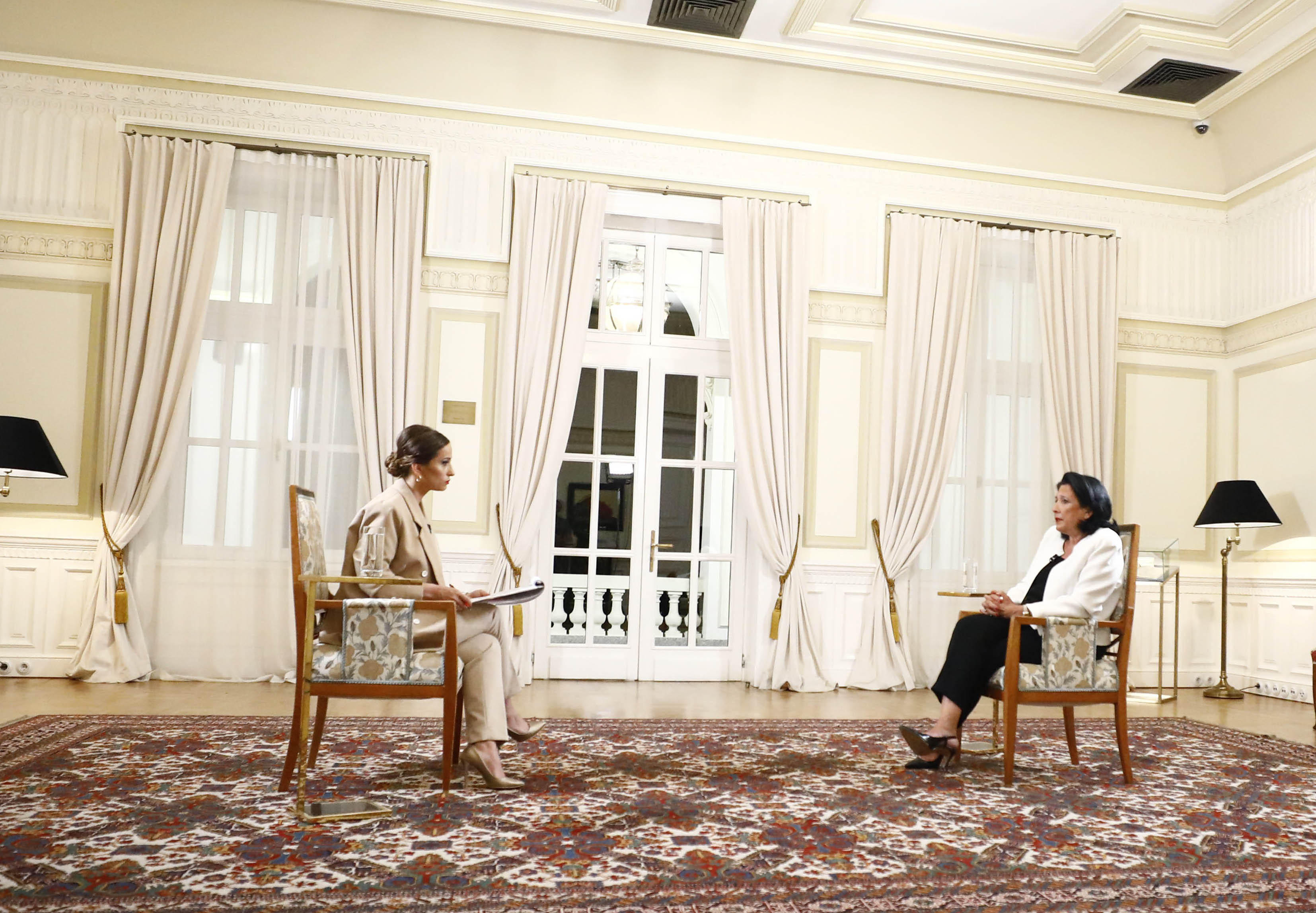
Madam President, one of the main issues today is European Union rapprochement. Getting closer to the EU and joining the European family isn’t just our and the next generations’ dream, it’s been the dream of our ancestors. Especially a personal dream of your own ancestors.
Along with challenges that have come from the Russia-Ukraine war, opportunities also arose. Georgia, like Ukraine and Moldova did, submitted an EU membership application. In your estimation, what problems is Georgia facing with this new opportunity? How is our country doing now, when is it expecting a response to the application from its partners?
I’d say we’re in shape. We’ve been preparing for this for a long time. It is not only the dream of my ancestors and of all those who built this State, but today, it is the dream of 88% of our population, of society as a whole. This an even bigger dream for our entire diaspora that sees from the outside how the country is preparing for this very important opportunity and is 100% backing it. We’re prepared in this.
Unfortunately, in the last year or year and half, we didn’t always take the steps that were expected of us, be it with the 19th of April Agreement that was abandoned, or “annulled”. Very harsh words were used in some moments and some incomprehensible steps were taken, like refusing a loan from the EU.
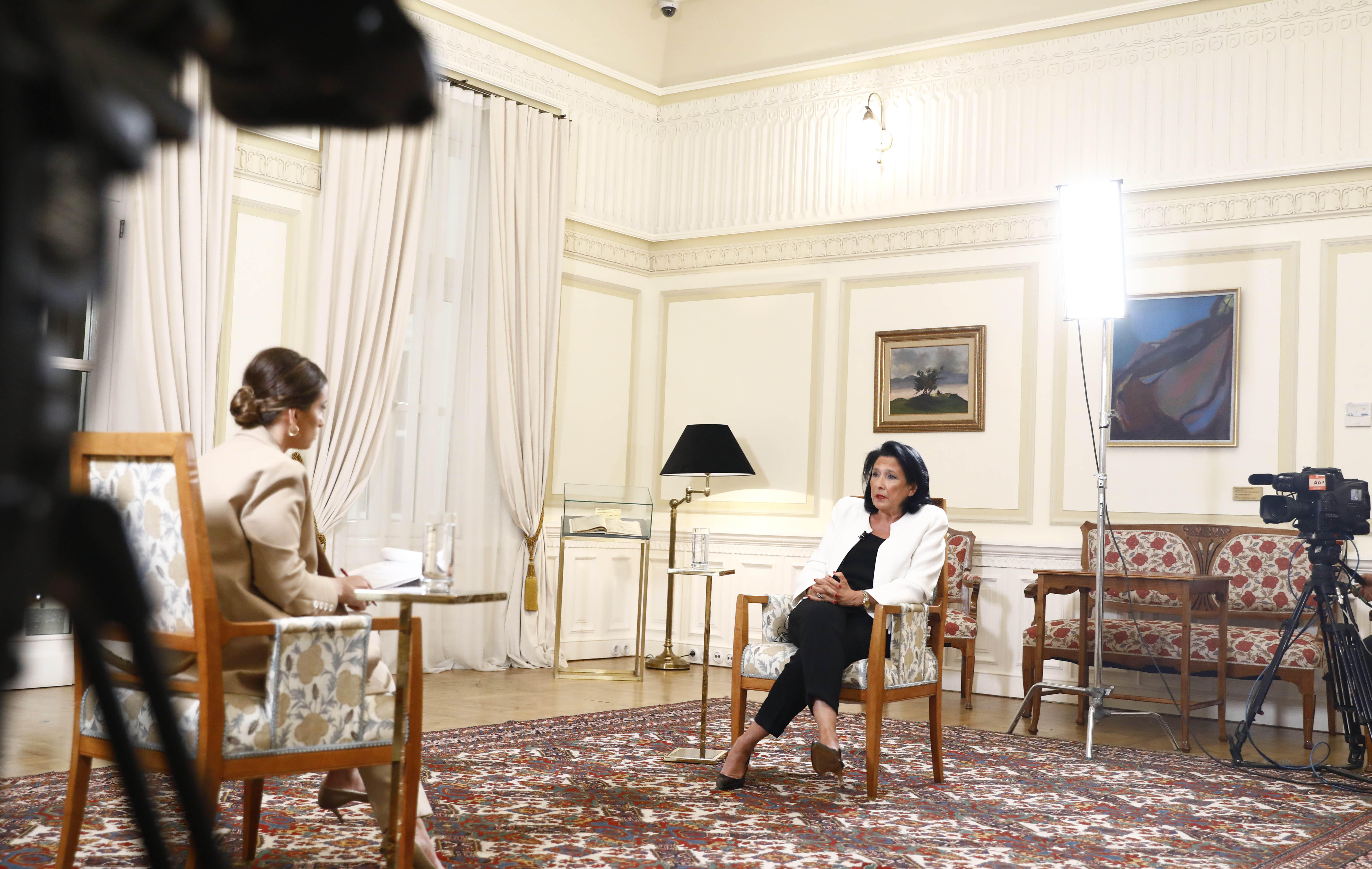
Let’s talk about this. Carl Hartzell said a few days ago that Georgia could have been better prepared for this historic moment. He is the EU Ambassador and expressing the position of the EU. What mistakes did we make? Where have we not done enough? Is there a chance that Georgia will miss the opportunity created by this new geopolitical situation?
Let’s not start going through the whole history here. But you can always prepare better. A lot could have been done differently. Different rhetoric could have used, I’m sure of that, and this continues in this last period. By the way, we hear from the majority party some statements that, I don’t know, probably are thoughtless or unnecessary at this time when we know we are waiting for certain decisions. You’re now asking what we’ve done and what we have not done and, at a time when this question is on everyone’s mind and everyone is waiting on what will be the first assessment of the Commission next week and then, probably at the end of June, the decision of the European Council and the heads of state’s, we’re making certain statements sometimes on MEPs, sometimes on Europe in general, which is a bit confusing.
Criticism of our European partners started specifically a few months ago. It can be said that Georgian Dream has developed a tendency to criticize MEPs or even sometimes American experts and former diplomats. When it comes to MEPs, I want to remind the viewers that we have recently heard statements like “Saakashvili’s and not Georgia’s friend”, “supporter of criminals”, “anti-EU”. Some also said that Georgia did not have to follow the words of individual MEPs.
In your opinion, what is the logic of this anti-Western rhetoric, of the criticism of partners against the background of what we’re waiting for from our partners, their decision. Do you seek an explanation for this?
You’re asking me what logic do I see in this and you shouldn’t be asking me because I don’t see the logic. You should ask those who make these statements right now. There are two issues here. First, some things should be left unsaid out of politeness. Second, at this time, the timeliness of it all. One cannot at this time, when we know the sensitivity of the moment, not be careful with statements – something can be said, a reaction can take place and that’s normal, but in such a sequence, I think it doesn’t make much sense.
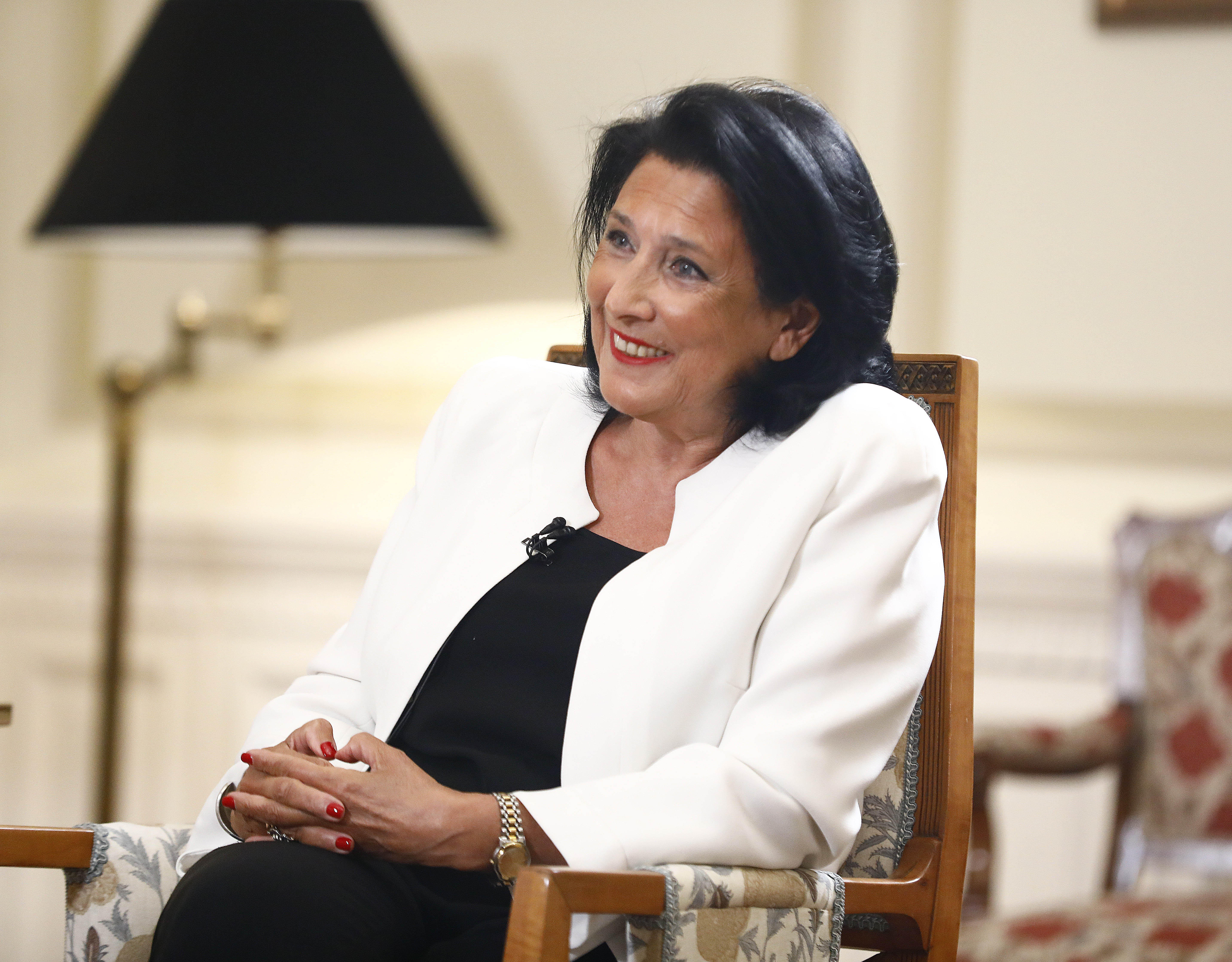
Is there a risk that criticizing our partners can negatively affect the decision we’re now expecting? We are talking about people who work precisely on Georgia. Do you think that Georgian Dream realizes this and if so, then why could this be happening? What is your personal position…
I do not have a personal position on something that isn’t up to me and I cannot explain the logic of these actions and decisions, this is all beside me. But I know what needs to be done to make the most of our chances. That’s why I went to Brussels at the time. I thought we should have had our say there. That’s why I’ve taken part in many interviews, to make our image appear as aspiring to EU integration, at an accelerated pace. Negative articles are being published today at this time and I see that there is no answer to these articles, though there should be.
What should be done from the government that’s not being done?
Many things can be damaged with words and our rhetoric is quite heavy. Also, the lack of response to those wrong headlines we’ve seen in European press. There has to be a response within seconds on a wrong article and what’s said that is wrong needs to be corrected with facts.
What could be the reason for this?
I don’t know the reason. You should ask whoever has that responsibility.
Do you not ask yourself? Do you not have a personal communication with the head of government, with the chairman of Georgian Dream? You are the President. Do you have relations with other branches of government?
What I don’t have is answers.
The second part of your question was about the impact it could have on major decisions. The Commission’s first assessment will probably be critical of some aspects, including judicial reform, of everything that was put in the “Charles Michel Document” – all that may be criticized. But I still keep the hope that the eventual political decision to be taken by the European Council will take into account the geopolitical situation and not just the mistakes made in Georgia today. The fact that the population is entirely oriented toward Europe, that we’ve come a long way this far – the statements and mistakes of the past year cannot be decisive, we can’t be put aside from this path.
Do you see that danger? Is there a possibility of this? We know that even after the end of the war in Ukraine, a new world order will be established. In your opinion, as the President of Georgia, where will we be – next to the Western nations and the civilized world or will we be excluded from there and find ourselves in the orbit of Russia?
I do not believe that they will forget us today. I have high hopes that despite everything, despite our many verbal or concrete mistakes, a decision will be made at a higher level and be more far-sighted. There is great interest in this region, as evidenced by the three visits of Charles Michel in this country within a single year. The more isolated and sanctioned Russia is, the more important this region becomes and I think this will also be properly taken into account, and it will also have an impact on the ultimate decision.
Madam President, let’s talk a little about the opposition now. In your annual address to Parliament, you said that “the opposition sins when trying to tarnish Georgia’s image in Brussels, Kyiv and the United States and making it seem as if our country deserved neither EU membership nor partnership with NATO and the US.” In this context, let me ask you, how much do you agree with the accusations by Georgian Dream against the opposition, according to which the main obstacle on our European path today is the opposition and its activities? It’s almost as if a background was being created to lay the blame on the opposition if we did not get the candidacy status…
The most important is still the government. You are the government, you make the decisions, you have the highest responsibility. At the same time, though, it is clear that the opposition is taking advantage of all the mistakes made to go to Brussels. A lot of them go there by the way. I don’t think this is the time to give Europeans the feeling that every Georgian is going there now and talking bad things about each other – it’s not a picture that will be useful. But the opposition is using mistakes and is appealing to this idea that these are just this government’s mistakes and that they shouldn’t affect the country’s reputation.
Can we say that the opposition is hindering the European integration process?
If they didn’t have cause, they wouldn’t be able to do this. So you should not give them cause. But when they do score and believe that it only affects the government, it also has an effect on the whole country, on its reputation. I said in Parliament that both sides were sinners, but the main pathos of my speech, which they’ve forgotten, is that we owed and still owe unity at this moment. What was left back then, one or two months? Even now, there is just a month left and we can’t be united in this period, to achieve this goal. I think the whole population is waiting for us to show ourselves, to show our people and the outside that Georgia knows what it wants, that it can put aside political hostility for some time, while unity is necessary today, and then go back to that hostility.
Would that have changed a lot for the better? Naturally, we would like our partners’ decision to be positive, but if this is not the case right now, who should be held accountable, would it be Georgian Dream or the opposition? In your opinion, what could be the Georgian society’s reaction to such an outcome?
What outcome? We don’t know what the outcome will be and it is very difficult to predict. Everyone is talking about whether or not we will get the candidate status. What format they will agree on is still not clear in the EU itself and the format is still being debated – whether all three countries will be considered together, whether it will be granting candidacy or will there be another, new political format. There’s a lot to talk about. So it probably won’t be black and white, but that doesn’t mean we shouldn’t look at ourselves and think about.
Madam President, let me ask you about the statement a few days ago from the European People’s Party, rather critical on Georgia. The EPP said that “informal oligarchic rule in Georgia has undermined good government and to the permanent disintegration of democratic institutions.” The same feeling can be seen from statements dome by individual MEPs in Brussels. The addressee of these statements and criticism, the Georgian government, explains that the criticism is coming from those in Europe with influence and contacts with the National Movement. What does the President of Georgia think about everything we hear from Europe? How easy is it to influence the opinion of our partners?
If we do not want to see such a critical attitude against the Georgian government, we need to work more with MEPs in Brussels, or on PR, to show what the true current face of Georgia is, what we seek to accomplish. We should not criticize them, we should think about how and what steps we should take to avoid criticism and, if we think criticism is not deserved and could not or did not provide an explanation, that it was not addressed to the right destination, it’s about the reality that we want to present.
The EPP speaks of informal and oligarchic governance. Do you see the influence of Bidzina Ivanishvili on Georgian politics, or do you see his influence in the actions and decisions of Georgian Dream?
I don’t see anything, to be honest, because I have not seen Ivanishvili for a year and a half. I have no idea who he is in contact with, or not in contact with, what may or may not be influenced by him.
I want to ask you about the “Charles Michel Agreement”, which was signed in your presence on the 19th of April last year at the presidential palace. Georgian Dream left the document and still refuses to fulfill its obligations. I want to remind our viewers that these obligations are related to judicial reform, the creation of an electoral system that any political citizen can trust, the constitutional changes that were one of its main components. As President, why do you think Georgian Dream is not trying to put an end to these problematic issues?
I can tell you that this document was very important and also very important was the fact that almost everyone was represented in this palace, all the parties that needed to agree on such a document and it is unfortunate that the annulment of this document was announced. I’m sure that its main elements, though time has passed and the format has probably changed, remain and on that needs to happen an agreement in the future if we want to continue the process of European integration. We don’t know exactly the format that will be found but we there may be a positive decision taken that will require some conditions to be fulfilled down the line. In these circumstances, absolutely included will be those parts of the so-called “Charles Michel Document” that have been postponed and not forgotten.
On the departure from the “Charles Michel Document”, there are some assessments from a not-so-small part of society, of the political spectrum or of expert circles, that Georgian Dream is seeking to retain powers. Do you see similar signs and attempts by Georgian Dream?
I’m not interested in why Georgian Dream did or does something or why it makes such decisions, I am interested in what should be done to stand firm on the path to European integration. This is the main principle for me, it’s written in our Constitution and I believe I’m here for this, I want to see us all act. I don’t care about evaluations, criticism for the sake of criticism, or what’s in someone’s head. We must be united in these steps and we must realize that these steps are necessary and will be inevitable. Whether we like it or not, whether we think a step strengthens or weakens someone else, these steps must be taken and that’s a must.
Who do you think is creating obstacles within Georgian Dream against these steps? Is it Irakli Gharibashvili, Irakli Kobakhidze, or someone else?
Personally, my position is that it needs to be done. Don’t ask me to blame someone for something. We must make decisions that are needed for any country on the path to European integration. Sometimes, reform is difficult, painful. Sometimes, it’s good for a party or it’s bad for a party. But it will need to happen.
Now, let me ask you about the statement you made on the Judiciary during your speech on the 26th of May. On Freedom Square, you said, “A fair court dates back many centuries in Georgia. The history of Georgian law would have adorned many European countries, and it is a bit of a shame that we cannot continue this legacy properly today.”
Your statement was immediately criticized by Irakli Kobakhidze, who called it “shameful”. Yesterday, he made a statement on this type of accusation needing arguments. Tell us those arguments you use to support your position on not being able to property fulfill the legacy of a fair court. In general, how much do you agree with the general opinion that the Georgian judiciary system is politicized and controlled by a so-called “clan”?
I really do not make such assessments. My conclusion on the court system and the general assessment is what our partners are telling us. It’s shameful for me that a country with such a history and tradition of the judiciary should be reminded by others that reform is still needed, that our judiciary is not yet properly developed and that we need to take more decisive steps on this path. We should already have reached the European level.
I won’t ask you anymore as to why Georgian Dream is no longer taking steps to reform the judiciary. We will once again ask representatives of Georgian Dream on this…
Let’s move on to another topic, the ongoing situation in Ukraine and the positioning of the Georgian government. 100 days have passed since the beginning of Russia’s large-scale war in Ukraine. Let’s evaluate the Georgian government’s policy and steps taken by our country. How much do you agree with the view that more could have been done to support Ukraine?
The country, the people, all of society announced complete solidarity with Ukraine and that’s what matters. We cannot not be entirely solidary with this country, which is experiencing the same thing, although for a longer time, that we did. These 100 days have been very heavy and Ukraine has shown the world a great example of fighting, attitude, organization and resilience. When Georgians see this, they appreciate it fully. The country has shown support in many ways. It’s true, we talk differently, but on sanctions, financial sanctions were adopted, which were the heaviest sanctions and which everyone has a duty to fulfill – we too are a part of them.
Do you not have criticism? You’ve said, “We owe it not only to share the pain of the Ukrainians, but also to their total solidarity.” What steps does this “total solidarity” involve?
Moral solidarity. Nobody is asking us for something that goes beyond our capacity, but we owe moral solidarity. I’ll give you an example, we’re maybe one of those few countries left in Europe where Zelenskyy was not given a chance to make a speech to Parliament. Isn’t this something that required nothing but total, moral solidarity?
Who was the addressee of your appeal? Can we say that your message on total solidarity was meant for the government and Parliament?
Whoever wants to, will understand. I judge politics and I judge facts. Do you want me to shoot arrows here and there? Whoever takes the arrow, let him take it. I say, we should have invited Zelenskyy to the Parliament of Georgia! This is very clear to everyone. Yesterday, he spoke to the Chamber of Deputies of Luxembourg. Also, and that’s my view, I think that on the 26th of May, a day that was held under the auspices of European integration, where there was a Georgian and a European flag on the façade of Parliament, there could also have been flags of Ukraine and Moldova.
Did you suggest this to Parliament?
It doesn’t matter whether or not I proposed this to the ruling team. If this Trio moves together toward European integration, Ukraine is the main reason today why this process is accelerated and maybe this is something we should acknowledge and know how to be grateful for.
You avoided answering the question. I wonder if this is an example of “silence is a sign of consent”. I’m talking about the question on the display of the flags of Ukraine and Moldova on the façade of Parliament…
I said neither offer, initiative nor silence.
Well, maybe society will draw its own conclusions. I want to ask you about the statements of the Prime Minister. Speaking in Parliament, he said that Georgia adheres to the terms of international sanctions against Russia, but stressed that Georgia does not intend to impose national sanctions on Russia. According to your information, what is the situation in this regard? As President, how do you assess the economic policy of our country toward Russia since the start of the war in Ukraine?
Nobody is asking us for national sanctions. In a lot of European countries, there are no national sanctions added on top of those main sanctions, which are the financial sanctions and the list of individuals who are not allowed to enter Europe. We somehow feel the need to say no to things that haven’t been asked from us. I don’t understand why it’s necessary for us to announce this publicly. There’s no request for us on additional sanctions. There’s no request from our partners to open a second front. Hearing this wish from some Ukrainians in government was understandable when you are at war and want to win in this situation and are looking at some form of relief – you can say some things but to claim that there is a demand for opening a second front is incorrect since there has been no such demand from our partners and friends. I don’t believe someone in this country supports war. This subject is very damaging for us, for everyone. We know that we have neither the means nor the wish to open a second front, since we have a different policy on our occupied territories and appealing or manipulating with this topic is not necessary.
It was exactly anti-American rhetoric that was said on the delay of the transfer of funds to Bidzina Ivanishvili from the Swiss bank. Not from the representatives of the government but from the people connected with Georgian Dream. There were assessments that the United States might be behind all this…
I don’t know. Nobody has presented facts that there was really some sort of delay and that’s another exaggerated topic. I don’t think this is serious. I’m talking about something serious, which is the second front, or the topic of war. There’s no danger of a second front, there is no such thing as a war party or parties in Georgia, but this does not mean that we cannot be morally solidary with Ukraine.
Because we mentioned Bidzina Ivanishvili, let me ask you about the processes developed around him. It’s very interesting to hear the assessment of the President of Georgia. As it turns out, it was the Swiss bank that delayed the transfer of funds to Ivanishvili. At the same time, his lawyer reported that “other suspicious” facts had been reported – such as delays in the movement of artwork and problems in the transportation of a helicopter purchased in Germany. What could be happening? In this case, what is it we could be dealing with?
You’re asking me to evaluate facts that nobody knows – what is really happening, what delays, why there are delays. Why should I be evaluating Mr. Ivanishvili’s financial relations with his bankers?
Do you know why I’m asking you, because in the background of the ongoing war in Ukraine, we know that the West has imposed sanctions on Russian oligarchs. Not only Russian oligarchs in general, but also began strict control of money of Russian origin. In this background, there are some assessments by some parts of society that Bidzina Ivanishvili may be on the list of sanctions. What kind of probability do you see in this?
Those aren’t called assessments, there have been some ideas, doubts on which the media is speculating. I am the President; I cannot start speculations and doubts. I don’t have information; it wasn’t said that there are sanctions on Bidzina Ivanishvili. If that were the case, I would evaluate this but today, this doesn’t exist. I am not the person from whom you should hear speculations and doubts.
In the context of the ongoing war in Ukraine, the issue of Georgia’s security has become more urgent. The ruling team says that the Supreme Commander-in-Chief only has a ceremonial role, but I still want to ask you, as Supreme Commander-in-Chief: how much do you see the need for Georgia to work with partners to acquire and procure defensive weapons? As Commander-in-Chief, what information can you provide to the public on this? Do we have this kind of activity going on with partners?
We really do, we’re working on this. This is in our defense strategy and every force is focused on this. I don’t see any problem in this, in our maximal capacities and in the help of our partners.
I want to ask you about your relationship with the government and Georgian Dream. There are obvious signs that everything is not in order between you. Can we assume this scenario where Georgian Dream sets aside the second president elected with its help and repeat the “Marvelashvili scenario”? What is your relationship with Georgian Dream? Is it just a difference of opinion on some important issue, is it a confrontation, or is it something deeper, a rift?
This is the norm, and I’ve said more than once that I was elected with the support of Georgian Dream. This was clear from day one, but some don’t believe that I am independent, apolitical, I am not in the hands of any party, nor do I take instructions from it, nor am I somehow obligated to share with them by evaluations or political views. It’s good to have diversity in a country. The President must be independent, say their opinion on some issues and everyone must get used to it.
What is your relationship now? How much do you manage to find common ground with Irakli Gharibashvili and Irakli Kobakhidze on important issues? I wonder what you think about them personally as high-ranking officials with the responsibility to run the country…
What are you thinking, you’re trying to make me talk personally about the Prime Minister?
Criticism against you comes from them on a particular issue. This is why in this case I emphasize the personal factor…
I never talk about anyone personally. I don’t answer to criticism or insult, that’s my personal position and I’ve had that on the opposition and on Georgian Dream. My main direction is to be all united on these principles on which we stand and that are inscribed in our Constitution. If there are differences, mistakes or inconsistent steps, I think we need to go back to the steps and all work together. There may be differences in opinions, but this cannot devolve into political problems. This country has only one problem – for us to reach our goal and for this, maximum unity is required.
Let me ask you the following question on two topics, since we can’t expand any longer as our time is limited. You’ve been accused by Georgian Dream of violating the Constitution on two issues. One was the uncoordinated visits to different capitals and the other was the appointment of ambassadors which, according to the government, you refused. Georgian Dream is going to file a constitutional lawsuit against you on the issue of ambassadors. How do you assess this decision of the ruling team. And concerning the visits, what is your current situation, how much of the barrier to the visits has been removed, do you face the same problem with the government?
It seems that this problem was unique at a very important moment and in a very important place. This was followed by our submission of our candidacy application. I think at the end of the day, everyone saw that it was the right and necessary visit. As for the constitutional claim and the next stage, I am waiting with great interest what will happen. If there will be a clear evaluation, explanation and clarification of competencies from the Constitutional Court, it would probably be very good. As for the ambassadors, we answered the journalists’ questions in writing in detail more than once as to when formal submissions were received and what were the answers to them. 100% were satisfied.
Let’s move to another important domestic issue – the health and imprisonment of the third president of Georgia. You know that both his family and his team are asking for Saakashvili to be treated abroad, to which Georgian Dream thinks it is not necessary and is a way for Mikheil Saakashvili to avoid punishment. I wonder what the current President of Georgia thinks of the developments around the former president?
You know my position on pardoning and I won’t repeat it again. In here too, what’s important is to not add to the polarization that exists in society. But on the other hand, the health of the former president is very important for the country and if questions arise, they all should be answered so that the proper attention be given toward his health condition. I said my opinion that maybe his transfer in another facility was necessary, which eventually happened and this is very good. And I won’t say beforehand, as President of this country, that the proper conditions do not exist in this country. If experts will say that for some reason, there is no means to receive here the proper treatment, then it is the government’s responsibility to answer by either transferring him somewhere else or bringing someone here. It’s necessary that our country’s reputation not be damaged with this and that the proper measures be taken so that nothing happens to the former president.
We know your position on pardoning, but I want to ask you at least one question, because Mikheil Saakashvili’s topic is not just a domestic issue, it has gone beyond Georgia and they’re talking about it even in European capitals. They’re speaking quite critically. I want to ask you how the development of the events and processes can change your position of “no and never”. Then, to calm the tense political situation a few years ago, when the political “temperature” was high, you made a similar decision on imprisoned politicians, Ugulava and Okruashvili, even though you did not consider them to be political prisoners. Why is Saakashvili a “red line” for you, how much is this just about his release potentially increasing and not decreasing polarization?
If you know the Georgian society, you know that it will be an issue of great controversy. I pardoned people three times before to quell the polarization, the result was not achieved then and here, the position of the people is much more strongly expressed. Given the very difficult years that the public remembers, I cannot here be part of something that could further deepen the polarization in this country.
I’ll also ask about the case of Nika Gvaramia. He is another prisoner whose detention is questioned not only in Georgia but also outside. How much do you share the assessments that the charges brought against Gvaramia should not have led to imprisonment?
That cannot be said this way. This is a court decision. I have no right to have an assessment of the court’s decision, which is what you’re asking.
Given that we’re talking about the founder of the opposition channel and a person undesirable for the government, do you have any questions as President?
As President, I cannot have doubts about the court. I can only say one thing – that politically, at this time, making this decision that could have been postponed in various ways, I think it was not timely. I will not say anything about the content of the court decision. I know as everyone knows that there were different options for punishment than what was decided, but I cannot evaluate that.
To defuse the situation, you started a process a few months ago with the aim of achieving national accord. It is your own words that each member of the community should play their role in this process. What is your role as President of Georgia, or even as an ordinary citizen, in this process, apart from organizing meetings? They see your contribution and role in political and expert circles with the mechanism that is in your hands, which is called the pardon mechanism…
Only that is in my hands? In my hands, the main thing is to create unity in the country around our main goal, European integration. For this, we may re-assemble, adopt once again a document in the style of Charles Michel’s, just like I once invited all parliamentary parties together and they signed. This is the role of the President. This view that the President’s role is only limited to pardons, I think is a bit wrong.
Finally, I want to ask you an important question, not about politics but about society and in particular, women. Recently, cases of violence against women, attacks on women have increased, including cases we’ve seen in the middle of the day, under the Sun, even in public transportation and at transportation stops. You said a few days ago that such facts are a shame. Does the President not think that the criminogenic situation is not being controlled by the relevant agencies as it should be? Do you have any remarks for the Ministry of Internal Affairs on this?
The issue of violence against women is very painful and demands a wider vision than just seeing how we can make the law stricter. That won’t be enough. Tightening the law could be necessary in some form and I plan on gathering lawyers on this issue to look at this together.
On the other hand, I am sure that this a much deeper problem that is derived from the reason why I started the accord process and which is that we live in a country of hate, of hate speech, of not tolerating each other, or confrontation and this creates this very difficult aura in the country, one of tension between individuals, which we can also see in the street if we walk. If we do not overcome this, whatever law you adopt, however you tighten the police’s strictness and take other measures, we still won’t see a result. The problem lies in our heads and we must solve this problem in its depth. This starts with the education system, in schools, families, on television, where there should not be such a constant hostile environment, which affects everyone. Some people can withstand it less than others and this shows in different forms. This is very painful for society because of our tradition.
I want to thank you very much for your time, for answering the questions that have arisen in society,
Thank you for coming here.
Lela Baghdavadze
PalitraNews TV
Program "Tavisufali studia" [free studio]