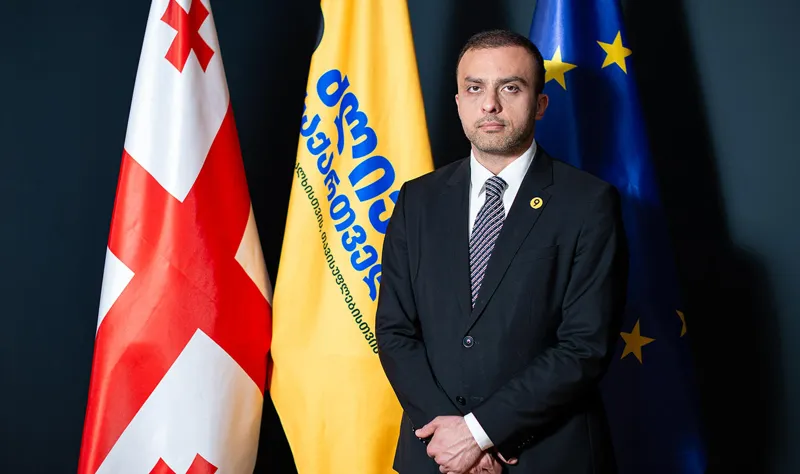
Petr Mikyska: We don't want to see Georgia in war - the population of Georgia can be calm in a sense that there is no condition that Georgia must enter into the war with Russia to get EU candidate status
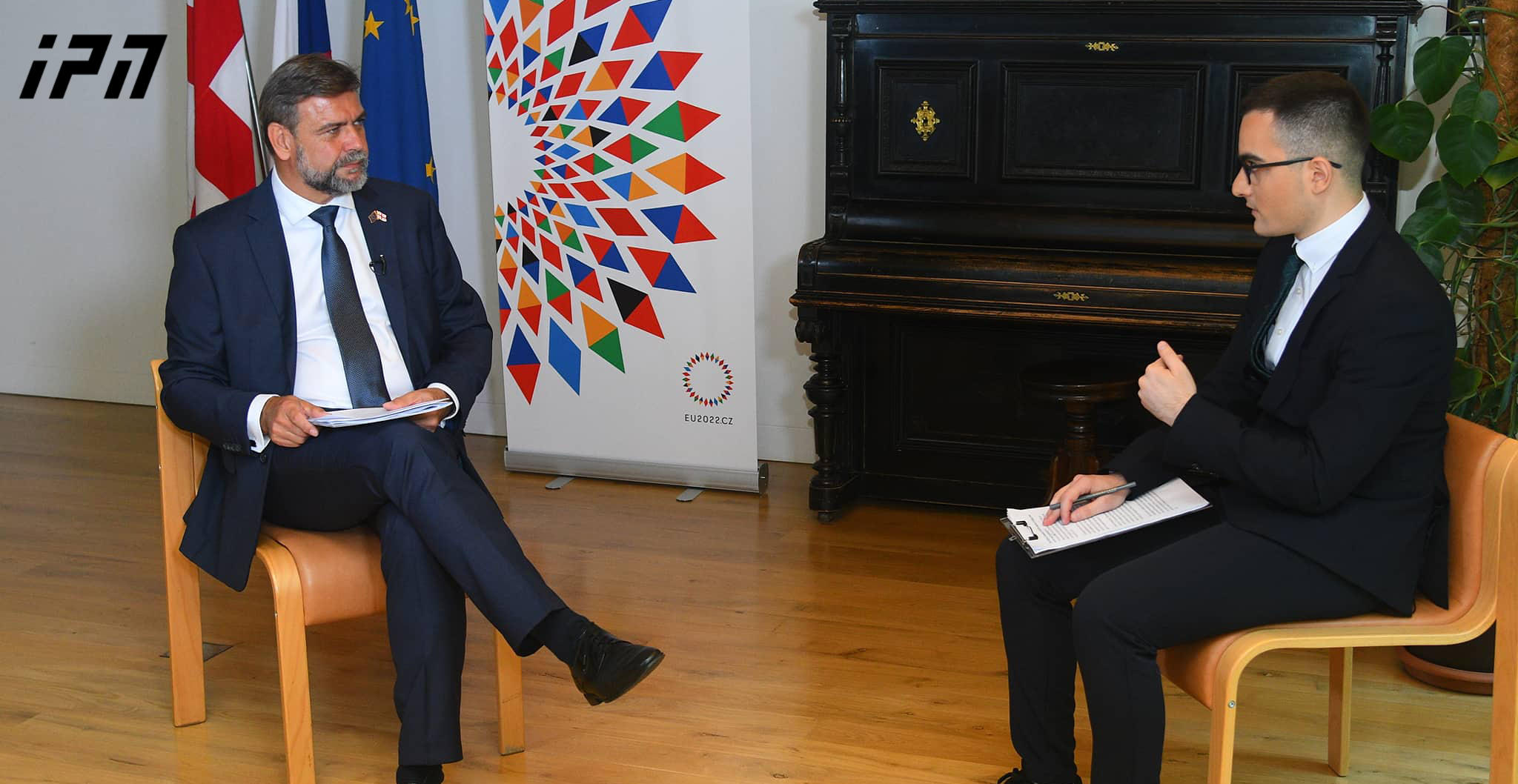
In July 2022, the Czech Republic assumed the presidency of the Council of the European Union for the next six months. This period coincides with a historic chance for Georgia, as the country has until the end of the year to fulfill the 12 recommendations of the European Commission to receive the EU candidate status. According to the Ambassador of the Czech Republic to Georgia, during the presidency, his country will, among other issues, focus on the process of accession of the Associated Trio and the implementation of recommendations set by the EC and the European Council.
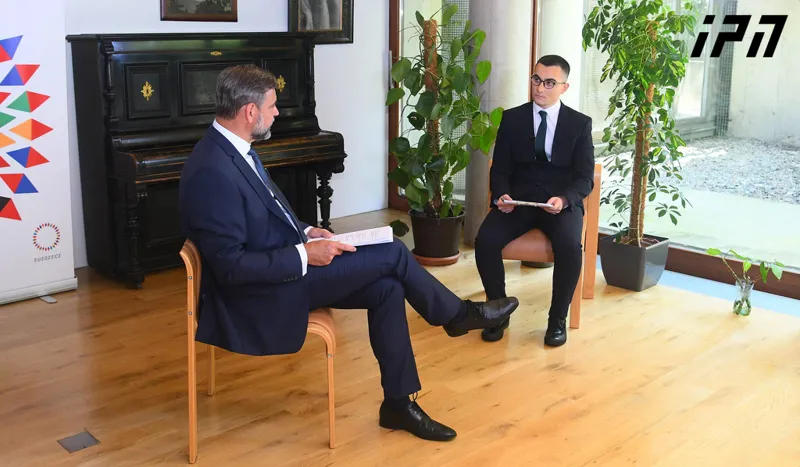
Georgia's Euro-Atlantic integration, political depolarization, de-oligarchization, the anniversary of the July 5 violence, Georgia-Czech bilateral relations and Russia's invasion of Ukraine - Petr Mikyska, Ambassador of the Czech Republic to Georgia, discussed these and other issues in an exclusive interview with InterPressNews.
Your country did take over the EU presidency on July 1. What are Prague's priorities during its six-month presidency of the Council of the EU? And what are the challenges that lie ahead of the Czech Republic in this regard?
First of all, it's our second presidency of the European Union Council, we held the first one in 2009. It was before the Lisbon Treaty, so it was different. At that time, the presidency was really managing the European Union. After the Lisbon Treaty, the role of the presidency consists mainly in facilitating the consensus among member states. What is strengthened as well is the cooperation and coordination within the trio of three presidencies, to enhance continuity. In our trio, we were preceded by France and we will be followed by Sweden. The program of the trio was approved already back in December 2021, and all presidencies should continue in the same line, more or less. Now we face a totally new situation, not only because of the Lisbon Treaty and the different role of the presidency, but due to Russian aggression in Ukraine, which demanded the change not only within the French presidency, but the total adaptation of our priorities as well. We had an active, ambitious and very successful French presidency. As a trio, we were trying to promote the pandemic recovery, facing the pandemic consequences, tackling the climate change, elaborating the Green Deal and other very important issues.
We continue working in line with these priorities. But due to Russian aggression, we had to change and adapt. Practically all our priorities are linked to the conflict.
The first priority is managing the refugee crisis and the postwar recovery of Ukraine. Supporting Ukraine in many areas with humanitarian aid, with military aid, supporting with sanctions against Russia, supporting with reducing our ties with Russia.
The second priority is linked to energy. The energy security is harmed by Russia - reducing the supply of oil and gas and using the energy as a weapon. We introduced and we are implementing sanctions against Russia. By the end of the year, 92% of Russian supplies of oil and gas to the EU will be eliminated. It's painful for us, for our economies as well, but we hope that the Russian economy will be damaged and the capacity to continue the war reduced. We have to find new resources of energy. We have to readapt Czechia as we were almost fully dependent on Russian gas and 50% dependent on Russian oil. We have to expand the transalpine pipeline transporting oil to Central Europe, including Czechia. We have to find new sources like liquefied natural gas from other countries. Czechia has no direct access to the sea and can not import LNG directly. This requires new interconnectors with the terminals and contracts with these terminals. It's not easy.
The third priority is the reinforcement of European Union defence capacities. We used to live in a world that we considered safe. We were developing our defence capacities but much of it was a little bit neglected. Now we have to step up industrial development in this area. Czechia was traditionally a producer of weapons and military material, unfortunately, it was lost a little bit over the years. Now we have to come back at least in those areas where we already have a good expertise and good experience.
The fourth priority is the strategic resilience of the European economy. Again, Europe was depending on supplies from hostile regimes, hostile countries. The supply chains were harmed already by the pandemic and the war certainly is not helping. We are talking about food safety, food supplies, we are talking about electronics, raw materials and so on. Our capacities in this sense must be strengthened, our self-sufficiency must be reached at least in a certain degree and it will require efforts and solidarity of all member states.
The fifth priority is linked to the previous ones. All those changes are easy to do if you are making your decisions in one center only in a centralized way, without due consultations and due processes. So our fifth priority is strengthening democratic institutions, rule of law, freedom of media, strengthening civil society because there must be an understanding and support from all key players.
We have our priorities in external relations too. Geographically it's logical that it's Ukraine and Eastern Europe. The second priority is the Western Balkans, a traditional priority for all presidencies last time, followed by the Indo-Pacific region and the Sahel, again for logical reasons. What we would like to focus on as well is the enlargement of the European Union. We had a positive breakthrough lately in the Western Balkans talks in the last days of the French presidency. We will focus on Associated trio countries' accession talks about the accession process, fulfilling and reaching the goals and recommendations set by European Commission and European Council conclusions. We will focus as well on development and humanitarian aid because it's a part of wider security issues. So these are our priorities.
Like all the presidencies, we have a motto. When Václav Havel spoke in 1996 in Aachen about the future of Europe, it was still far away before our accession to European Union. He was thinking about the future of Europe and about the participation of citizens mainly. He used the words Europe as a task, as a task for everybody, for every citizen. Adding three important words we express the vision of our presidency: “Europe as a task - rethink, rebuild, repower”. You can define and explain these three words in many ways, but I think it's a very good expression of our future goals, intentions, our priorities.
Georgia has the time until the end of this year to meet 12 recommendations put forth by the European Commission to receive its EU candidate status. This crucial time for Georgia coincides with your EU presidency, so could you please tell me how the Czech Republic is going to help Tbilisi to achieve its strategic goal – obtaining EU candidate status?
I read somewhere that Georgia was given "only" European perspective "instead" of the status of candidate country. Definitely, it's neither "only" nor "instead". The European perspective is very important. I remember that we were discussing the European perspective for Georgia for a long time and there was quite a strong opposition inside the European Union against giving Georgia the European perspective. So it's a very strong message and I think it's a very huge success for Georgia having the European perspective.
The candidate status is important because it's giving the country not only orientation, not only direction but also financial means to contribute to the development of the country and to reach those goals. We are sure that Georgia will meet the requirements. The conditions and recommendations, I think, are well defined and realistically reflect the situation, on the other side, they are not easy to achieve given the political situation. But we assume that all strata of the society, all political forces and civil society are united in this goal.
Yes, there are some forces which are not supporting this idea, but we see them as a very small minority. The goal is reachable, is within the grasp and our presidency can play a supporting role in accordance with its role as a presidency. We are not the executive body in this sense, we will be promoting a consensus inside the European Union. We are following the development in the country, we will be giving our opinion on it, our assessment, then in Brussels it will be assessed by institutions and member states and we will see the result of the European Council later. We will try to support Georgia within our presidency's events, as we are organizing many informal meetings with partners and this is linked to our priority of working with Eastern Partnership and Associated trio countries as well. The representatives of the Georgian government, civil society and media will participate in several events, several conferences dedicated mainly to resilience. This is not only about resilience, but a good opportunity to present already reached success or already reached positive moments addressing the twelve conditions. It will be the case, for example, at the end of August when EU ministers of foreign affairs will meet in Prague at the so-called Gymnich meeting, which is an informal meeting of ministers of foreign affairs of the European Union and ministers of Georgia, Ukraine and Moldova are invited too. We will have meetings of ministers of the interior within the so-called Prague process on migration. We will have meetings of ministers of economy and it will be again about resilience, both the economy and the migration.
We will have meetings on the resilience of municipalities. We will have meetings on digital resilience. So this is our contribution to give the floor to Georgia to present how the recommendations are addressed. So this will be the first step and the second, trying to reach the consensus of all member states in Brussels.
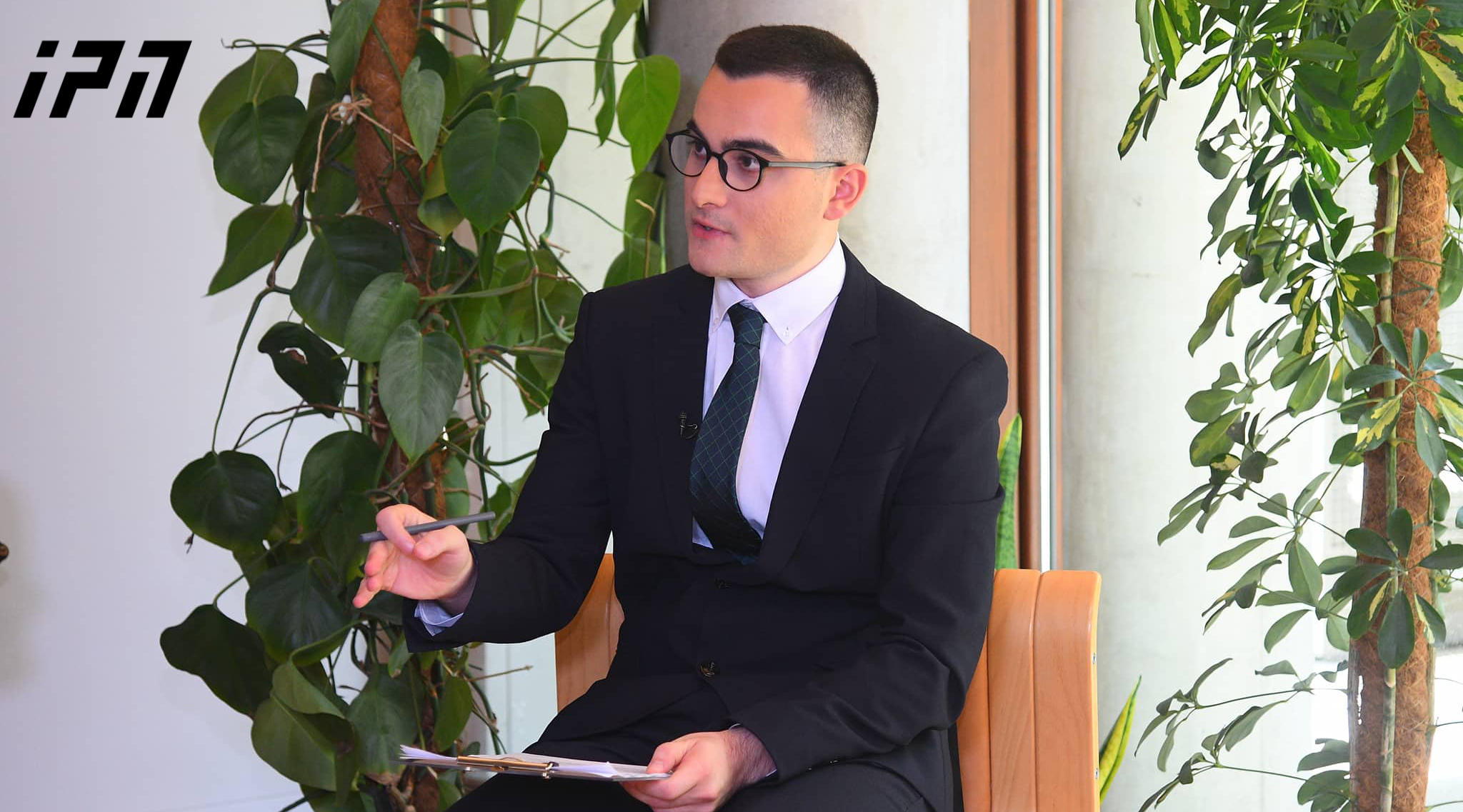
Irakli Kobakhidze, the chairman of the ruling Georgian Dream party, said that if Georgia gets involved in the military conflict with Russia, the EU candidate status will be guaranteed for Tbilisi in December. According to him, Ukraine received the status of a candidate for EU membership due to its involvement in the war.
It is not the first time when we hear such kinds of statements regarding the EU candidacy from the governing party. What’s your comment?
In the case of Ukraine, it was a strong message, it was a reaction to Russian aggression. Ukraine was attacked, Ukraine is under aggression. Nevertheless, nobody, especially the European Union, wants to draw Georgia into war.
Georgia’s involvement in the war is not a condition for receiving the candidate country status. We don't want to see Georgia in war. We want to see candidate status as a reflection of the reform process, a reflection of the progress in democratic reforms. The population of Georgia can be calm in a sense that there is no condition that Georgia must enter into the war with Russia to get the candidate country status.
As you know, Georgian politics are deeply polarized. The Commission recommends that Georgia will be awarded the candidate status, once one of the top priorities - the issue of political polarization - will have been addressed. What is your advice for Georgian politicians to overcome the polarization? How can it be achieved in this short period of time? Or based on your observations can it be achieved at all?
I'm sure that depolarization is possible. What's more, it's imperative, because the European choice, the European orientation, the European goal, is a matter of the united approach of all society, of all political parties.
Every step in this European direction should be made in a consensus and should be discussed between all political parties and with civil society. All forces, the government and the opposition and civil society should realize that they have to meet constructively, that they have to discuss in a civilized manner, without insults, without claims, without preconditions, and only in this way the depolarization can be reached. It's not just for the sake of the candidate status, it's for the sake of normal civilized development of this country.
The ruling Georgian Dream party said that they are creating the working group for the implementation of the 12-point recommendations. The part of the opposition says that they are not going to take part in it as they have no trust in the governing party. What’s your comment?
I consider it an error. As I said, there must be a constructive approach of all political parties, of all political forces. We have a plan from the government, we have a plan of the civil society, we have suggestions of leading opposition political parties. First, in my opinion, all political forces and civil society should meet, should discuss how will be the setup for the next steps and only then proceed. Preconditions, boycotting and so on is a clear error which is not leading to depolarization.
The EU asks Georgia to be granted candidate status at the end of this year, Tbilisi should guarantee the full functioning of all its state institutions, strengthening their independent and effective accountability as well as their democratic oversight functions; further, improve the electoral framework, ensure a judiciary that is fully and truly independent, accountable, and impartial along the entire judicial institutional chain, strengthen the independence of its Anti-Corruption Agency, strengthen the fight against organized crime and etc.
All of these above-mentioned issues are those things on which Georgia is working for 30 years. Given this, how realistic is it for you Georgia to implement all of these crucially important reforms in just several months?
The ruling party, Georgian Dream, has proved that it can pass the legislation in a very fast way. We saw it in December last year. So I believe that if there is a consensus of all political forces on the first necessity, and this necessity is meeting criteria set by the Commission and the European Council and the way how to reach the desired form of the legislation, I am sure it can be achieved. Well, it is discussed for a long time, but the election reform, for example, is on the table already. It was voted already in the first reading. So it can take one week and it will be already fulfilled. The anti-corruption strategy is much needed, definitely, as many other reforms. If we can see the tendency, if there is a will, you can proceed very fast. And that will should be showed from both political sides, all political forces and the civil society. I am repeating this call for unity, responsible and constructive approach again, but I think that this is the most important thing.
How Georgia can implement the commitment to “de-oligarchization”, one of the recommendations put forth by the European Commission, when there is no consensus in the Georgian political spectrum on who can be regarded as an oligarch? The ruling party says that the concept of an oligarch does not apply to Bidzina Ivanishvili, the founder of the GD and the former Georgian PM. According to the governing party, this concept can include many people connected with the “radical part of the opposition”. On the contrary, the leading Georgian opposition parties consider Ivanishvili as a Russian oligarch. Does the EU imply Bidzina Ivanishvili when it indicates Georgia on de-oligarchization?
I think the names are not the most important thing. The important thing is institutional setup, strong independent institutions that cannot be overpassed, bypassed by anybody.
In my opinion, it's not important whether it's Mr. A or Mr. or Mrs. B. Important is that the state is resilient to the efforts or to the attempts of any person to influence political and economic life in a disproportionate way, harming the interests of the society, rule of law and democracy.
This is very difficult, of course, because the personification is there and perhaps always will be. Only a coordinated, constructive, responsible and common goal-oriented approach by all parties will set the scene. The main thing here is institutions, institutions, institutions, and rule of law.
This month marks the anniversary of the July 5 violence of 2021, when pro-Russian, far-right mobs attacked 50 journalists. Georgian President Salome Zurabishvili has said that the public is still waiting for the perpetrators to be brought to justice.
Is Georgia a safe place for journalists? Do Georgian authorities undertake efforts to launch impartial, effective, and timely investigations in cases of threats against the safety of my colleagues and other media professionals? What’s your response?
Well, it's not only madam President and the public waiting for appropriate investigation and for bringing to justice not only the physical perpetrators of the violence but also the organizers. European Union as a whole and member states, embassies here, we were and are advocating for an appropriate investigation. We had several meetings with the Minister of Interior and we were calling for a swift investigation. Unfortunately, the organizers were not reached yet. We are continuing these efforts. We are keeping our promise made after July 5 that we will follow the investigation and we are still in it.
Our last meeting with the Minister of Interior took place just before Tbilisi Pride this year, it was dedicated not only to last year's pogrom but to the future as well. I can say it's very commendable how the police and Ministry of Interior handled risks and threats towards organizers and participants of the Tbilisi Pride in the beginning of July and you probably saw the joint statement the embassies issued on this matter. So yes, we will follow it, we will ask for proper investigation and we will ask for really tackling the hate speech and undemocratic behavior of some political formations.
I believe that the Conservative Movement should not have been registered as a political party. It shouldn't have been given the opportunity to spread the ideology of hatred and it should not have been given the opportunity to work on reaching the popular support. I think that there is a good legislation in Georgia on this matter.
What is required is political will and support. Protection of journalists shouldn't be something special. Let's see the protection of minorities, including the LGBTQI community and journalists as the protection of any citizen of Georgia. Obviously, journalists are at bigger risk because they are visible. So their protection should be stepped up.
Georgia aspires for many years to join NATO. The Czech Republic supports the South Caucasus country in this regard. How close or far is Georgia’s membership in this western military alliance?
Not long ago, we had a NATO Summit in Madrid. The Prime Minister of Georgia, Minister of Foreign Affairs, Minister of Defence participated so they could hear from the Allies that the aspiration of Georgia to become a member of NATO is welcomed and supported. The open door policy started in Bucharest in 2008 and it continues. There were several steps made to deepen the ties between NATO and Georgia and we have to use every opportunity to enhance Georgia's defence capabilities. On the other side, the European Union agreed on the European Peace Facility expansion for Georgia recently. EU allocated to Georgia 20 million euros for the next three years for needs in the defence sector. There is a project for another €20 million for next year that can be linked not only to non-lethal support, which is the case of this year's decision but also to lethal material if Georgia wishes so. Czechia is supporting Georgia actively and it can be seen, for example in our role as a leading country in a very important project of SNGP, Substantial NATO Georgia Package, which is linked to communication between NATO headquarters and Georgian institutions. So this is our support, this is our contribution.
Together with participation in military exercises, we have an annual plan of cooperation between our ministries of defence and armed forces and this will be strengthened as well.
Next year, Georgia and the Czech Republic will celebrate the 30th anniversary of their diplomatic relations. How would you assess the current political, economic, military, cultural and educational ties between the countries? How are you going to bolster cooperation between the nations?
This is a question for a long discussion, but I will try to be very brief. On the political level, we have a very good relationship. Our high-level officials are meeting regularly. Obviously, it was affected by the pandemic but I think that we recovered quite well this year. The Minister of Foreign Affairs of Georgia Ilia Darchiashvili visited Czechia in April. It was his first bilateral visit abroad and we really appreciate this opportunity to have frank and open talks. The speaker of our Senate Miloš Vystrčil was in Georgia for an official visit in May and it was a very successful and very fruitful visit with topics ranging from the conflict in Ukraine to bilateral economic ties to human rights to cultural cooperation. We had very frank discussions and I think that everybody on both sides could not esteem or assess this visit in other way than very successful. We have obviously cooperation in the political sphere at lower levels as well, consultations and so on. We are supporting Georgia, as I already said, on European fora and on international fora as well and we are grateful for Georgia's support too.
In economic cooperation, we have never been better. Czechia, as you certainly know, is one of the key investors in Georgia. We usually are among the top five foreign investors and we hope that it will continue like this. Our commercial exchange is growing every year, again with one exception, which was 2020, the pandemic. Before the pandemic, our trade was growing by 10% every year. We recovered already in 2021 and reached pre-pandemic levels and a new record high. Nowadays our commercial exchange reaches 114 million euros, 25 million of these are Georgian exports. We hope that these exports will grow steadily. Why? Because we see similarities and potential. As a relatively small country with a relatively small market, Czechia has to rely on external relations, external markets and our exports. We see the same here in Georgia. Only with exports, Georgia will grow. Only with exports, Georgia will become even more prosperous. For this, obviously, the production base should be expanded and developed. We are trying to help not only with investments but also with improving the access of Georgian production to the Czech and European markets. We should focus on this even more because Georgia should rely on really reliable markets, not only the geographically close markets. We know that it's not easy, but relying on only one trade partner gives this partner enormous leverage, an enormous instrument to influence not only the economic but also the political development of the country. So we would like to see diversification, more Georgian exports to European Union, to democratic countries.
We already spoke about our cooperation in the military sphere and we would like to expand this, for example, with exchange in the military-industrial sphere.
What makes me very proud is our development cooperation. Georgia is one of six priority countries for Czech development cooperation as well for transformation cooperation, we are focusing on healthcare, social welfare, agriculture, the complex development of mountainous areas and education. For example, we have government scholarships, which are covering everything but air tickets. By the way, now I can make, thanks to you, a call on Georgian students to apply for those scholarships. There is already information published on our website. And in a couple of days, the registration system will be opened and the selection process will start, mainly in an electronic way. So please visit our website, find the conditions and apply for this scholarship.
We have very nice cooperation in tourism. The flow of Czech tourists is growing again, after the break caused by the pandemic. So this is a very short, brief description of our relations.
As you mentioned, next year we will celebrate the 30th anniversary of our diplomatic relations. Czechia is younger than Georgia because it started its existence only in 1993. So we are not having the 30th anniversary as the majority of the countries this year, which will give us some exclusivity in this regard (smile).
My very last question concerns the ongoing Russian invasion of Ukraine. Your country is considered to be one of the EU nations that are actively backing Kyiv. The Czech Republic has sent military equipment to Ukraine. Besides, you took in hundreds of thousands of Ukrainian refugees fleeing the fighting. What more can you do for Ukraine to help it and also, how can Prague step up its efforts to hold Russia accountable for its crimes?
Let's start with Russia. We had very strong discrepancies with Russia even before the invasion. We were experiencing cyber-attacks and hybrid influence on our economy, politics and media scene. But the most important moment was most probably the explosions in military depots back in 2014. The investigation led to the conclusion that Russian agents were responsible for these explosions with two deceased people and substantial economic damage. The decision was made to expel diplomatic personnel in the Russian Embassy in Prague involved in non-diplomatic work. Basically, agents of the secret services were expelled. Russia replied with the same, although the real Czech diplomats, not spies, were expelled. Currently, we have only seven diplomats in Embassies in Moscow and Prague. We closed our consulates in Saint Petersburg and in Yekaterinburg, we retired permission for Russian consulates in Brno and Karlovy Vary, we had to close our cultural center in Moscow and practically all relations with Russia were frozen. After the invasion started, the Czech government adopted a decision to stop issuing visas for Russian citizens and Belorussian citizens as well.
We try to step up our efforts in support of Ukraine not only bilaterally, but also within the European Union. We were promoting and supporting the sanctions. Czechia voted for all six packages of sanctions against Russia and we are ready for more. It's difficult and painful for us, because of the dependency on Russian energy resources. Our exports to Russia were not big - it basically made only 3% of our total exports, but many Czech companies invested in Russia and they had to withdraw because the conditions were unsupportable. In certain ways, it's very painful, but we assume that all democratic countries must bear this responsibility and suffer a little bit for democratic values and peace. It's a shared responsibility of all of us and we have to do it with and for Ukraine, we have to do it for ourselves. As you mentioned, we are supporting more than 300,000 refugees living nowadays in Czechia, mainly women and children. It brings elevated costs, obviously, but again, this is very important. People have to have a safe haven to flee and we are proud that Czechia is one of them. I am proud of the popular support for refugees. Many of them are living in the families and not only in accommodation provided by the government or some institutions. Children are going to schools and they are adapting to a new life. Although the majority of refugees declare that they want to return to Ukraine and I think that they will after the war ends.
We are supporting Ukraine financially, with humanitarian aid, but also militarily. We are supplying heavy weaponry that plays an important role against much bigger capacities of Russian invading forces. And we will continue to do that, negotiating more tanks, more howitzers and so on.
Tornike Kakalashvili
InterPressNews